
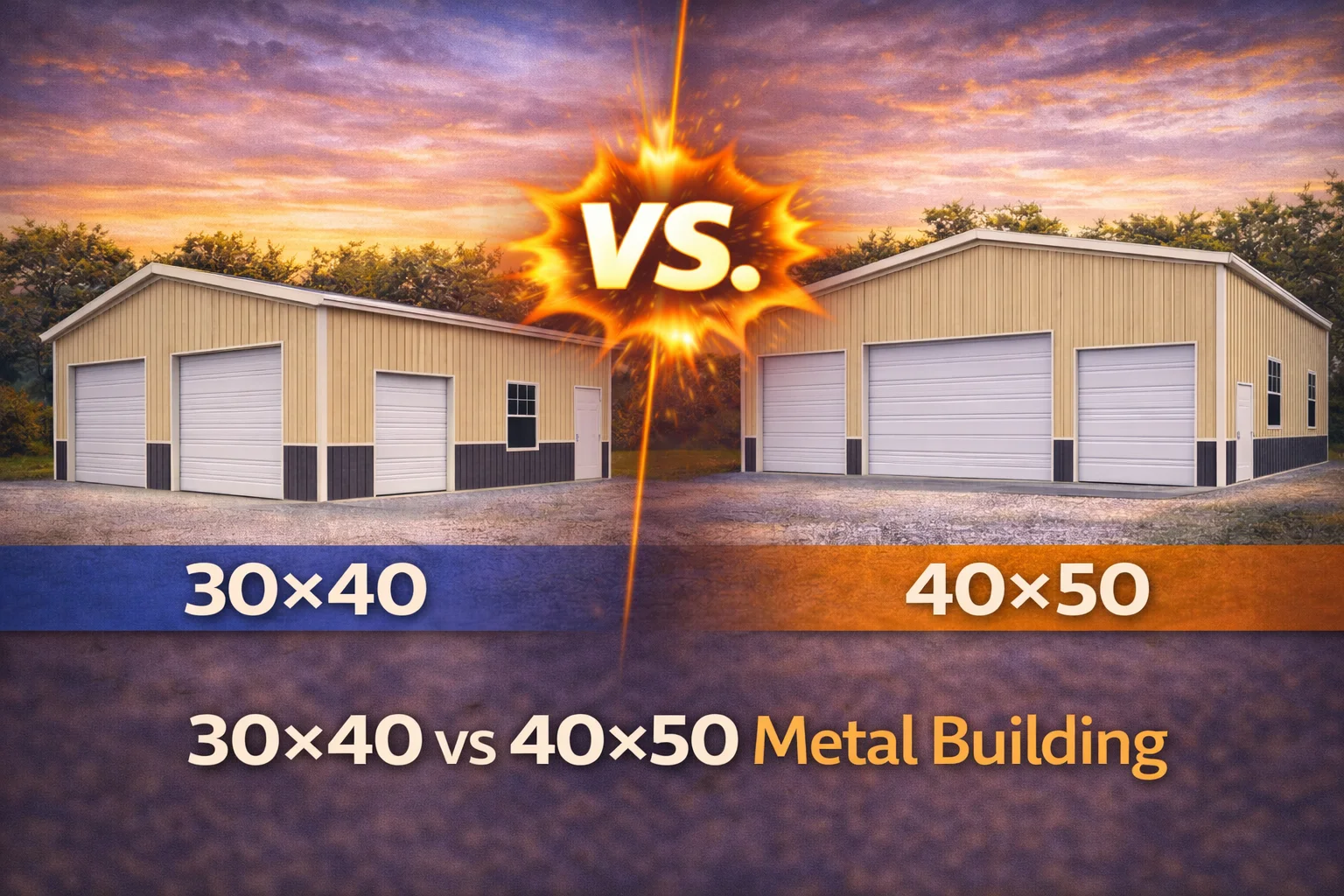
The 30×40 vs 40×50 question usually comes down to one thing: how much clear, walkable space you’ll have once vehicles, doors, and storage are actually in the building. On paper, 800 extra square feet sounds like a simple upgrade. In real life, it’s the difference between a shop that stays usable and one that slowly turns into a tight garage you keep “meaning to reorganize.”
What throws buyers early is how many size comparisons ignore the stuff that steals space fast: overhead doors placed where your best tool wall should’ve been, shelves that stick out farther than you planned, trailer tongues and mower decks that refuse to tuck in neatly, and the fact that you don’t work in a shop with your vehicle doors closed. I’ve watched people build the “right size” and still end up boxed in because they didn’t plan height, doors, and layout like someone who actually uses the building week to week.
Which Size Makes Sense in Real Use
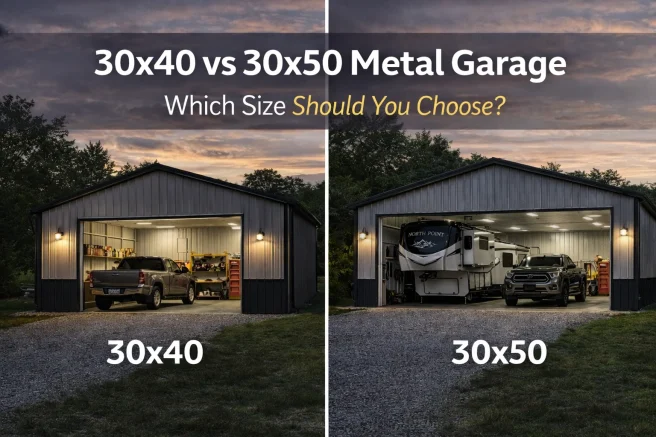
A 30×40 metal building works when you’re parking 1–2 vehicles and want a practical workshop, as long as you protect wall space and don’t get cute with door placement. A 40×50 makes sense when you want separate zones (parking + shop + storage), you’re storing larger equipment or inventory, you’re dealing with trailers/RVs/boats, or you want room to grow without reshuffling the whole building every time you add something.
What a 30×40 Metal Building Really Feels Like
Parking: “fits” isn’t the same as “comfortable”
A 30×40 (1,200 sq ft) is the classic garage-shop footprint because it can do a lot without blowing up the budget. But the 30-foot width is the limiter.
Here’s how it plays out with real clearances:
- A full-size pickup is often close to 7–8 feet wide with mirrors.
- A comfortable walk lane is 3–4 feet.
- Cabinets/benches usually eat 2 feet (and more once you start hanging grinders, chargers, hoses).
So yes—two vehicles can fit. The question is whether you can still open doors, roll a cart around, and keep a work area that doesn’t get buried.
Workshop: it’s a good shop if you plan one “sacred” wall
The 30×40 works best when you commit to at least one long wall that stays mostly uninterrupted for:
- bench + cabinets
- shelves
- air lines, power drops, tool hangers
If you pepper both long walls with doors and windows, you’ll feel cramped no matter how nice the building is.
Mixed use: the layout that saves most 30×40 owners
If you want parking + shop + storage, this approach usually keeps the building functional:
- Front 24–28 feet: parking + daily work
- Back 12–16 feet: storage row (parts, tires, bins, seasonal equipment)
One real-world install moment I see a lot: a customer picks a single overhead door “to keep the price down,” then later realizes their man door and tool wall are fighting for the same spot. The building didn’t fail. The plan did. In a 30×40, every opening has a cost—usually paid in lost wall space.
Everyday movement: the sneaky pain point
Most people don’t think about how they’ll move inside the building until they’re carrying lumber, dragging a welder, or trying to squeeze past a truck with the door cracked open. If you want the 30×40 to feel bigger, your best money is often:
- Smarter door placement
- One wider overhead door (or two smaller doors placed right)
- A slightly taller eave height if you want overhead storage or a lift later
What a 40×50 Metal Building Really Feels Like
Multi-use layouts: you stop stacking functions on top of each other
A 40×50 (2,000 sq ft) is where the building starts acting like a “shop” instead of a garage you’re trying to work inside. You can actually separate zones:
- A parking bay that stays a parking bay
- A work bay where tools live and the floor stays open
- Storage that doesn’t take over the center aisle
That’s the big difference. It’s not just more room—it’s less conflict.
Gear storage: wide stuff finally has a home
If you’ve got any mix of:
- Trailer(s)
- Side-by-side/ATV
- Zero-turn mower
- Pallets/inventory racks
- Long materials (steel, lumber, pipe)
…a 40×50 lets you store it without turning your shop into a maze.
RV / boats: bigger helps, but height is still the gatekeeper
A lot of RV/boat buyers pick 40×50 and still get burned—not on footprint, but on door height and interior clearance.
Real talk on height:
- If your door is too short, the building might as well be a storage unit you can’t use.
- Overhead door height usually needs extra headroom above the door for framing and tracks.
- If you’re storing an RV, measure your rig’s highest point (AC units, antennas, racks), then add clearance so you’re not white-knuckling every entry.
Business base: the “small warehouse” effect
For contractors and small business owners, 2,000 sq ft is often where it becomes an operation space:
- You can stage jobs
- Keep inventory organized
- Load/unload without clearing half the building first
Future flexibility: the quiet reason 40×50 wins
Most people don’t regret going 40×50 because it gives you room for the stuff you haven’t bought yet. And you will buy it. Tools multiply. Storage grows. A “temporary” project becomes permanent. That extra space keeps the building from getting tight two years in.
30×40 vs 40×50 Metal Building Comparison Table
| Size | Best For | Real Limitations | Rough Starting Price Range* |
|---|---|---|---|
| 30×40 (1,200 sq ft) | 1–2 vehicles + workable shop, hobby shop, compact storage | Wall space disappears fast; storage creep makes it feel tight if doors/windows aren’t planned | $28,000–$60,000 |
| 40×50 (2,000 sq ft) | Zoned shop + storage, contractor base, RV/boat + shop, inventory | More slab and site prep; footprint can run into setbacks/zoning on smaller lots | $45,000–$100,000 |
*These are real-world planning ranges I see for a basic build where buyers want a usable building (structure + typical install + concrete), before major sitework (grading, long drives, utility runs) and before interior finish (electrical, insulation, plumbing, finished walls).
Code note: Wind/snow requirements, soil conditions, and permitting expectations can change the steel package and anchoring. Same size, different county, different math.
Key Tradeoffs That Matter After You’ve Used the Building
Cost per square foot vs utility gained
Bigger buildings often look better on paper per square foot. But the real value of the 40×50 shows up in daily use: you keep a clear aisle, you get uninterrupted walls for storage, and parking doesn’t swallow your work area. If a 30×40 forces you to park outside or constantly move stuff to do basic work, it stops feeling like the “budget” choice.
Height: most regrets aren’t about size, they’re about clearance
I’ll say it straight: people blame square footage when the real issue is height. If you might want a lift, overhead storage, tall equipment, or an RV door that isn’t a gamble every time you pull in, plan height early. A slightly taller eave height can make a smaller building live bigger.
Workflow: where you walk and where things land
A shop works when you can move from vehicle to bench, from bench to tool wall, and from tool wall to storage without weaving around parked equipment. A 40×50 gives you space to build that workflow naturally. A 30×40 can do it too, but it requires discipline in layout.
Future expansion: it’s rarely as easy as people hope
Even if an addition is possible, it usually involves engineering, reworking end walls, and matching loads and framing. It can be done, but it’s not a casual weekend upgrade. If you already know you’re growing, it’s often cheaper to build the right footprint now.
Resale value: usability sells, not just square footage
A bigger building helps resale when it’s usable: door height that fits common equipment, smart access for trailers, and a layout that leaves wall space for storage. A big building with short doors and chopped-up walls can still feel like a miss.
Common Buyer Mistakes (and the quick lesson)
- Choosing “standard height” and regretting it. Lesson: if you might want a lift or taller doors, plan height now.
- Ignoring door count and placement. Lesson: doors cost wall space—plan storage walls first, then place doors.
- Underestimating storage needs. Lesson: assume you’ll fill more than you think.
- Skipping insulation in mixed climates. Lesson: condensation and comfort problems show up fast when seasons swing.
- Pouring a slab without thinking about future loads. Lesson: if a lift might happen, plan reinforcement up front.
FAQs
Is 30×40 big enough for a 2-car garage and a workshop?
Often yes, if the workshop is a real wall setup and you keep the center aisle clear. If you want roomy aisles plus storage plus parking, it gets tight.
Is 30×40 big enough for a full-size truck and SUV?
Usually. The real question is whether you want doors open and still have a comfortable work lane.
What’s the difference between 30×40 and 40×50 metal buildings?
It’s 1,200 sq ft vs 2,000 sq ft—an extra 800 sq ft. In real use, that extra space usually becomes a dedicated work lane and storage zone instead of “stuff piled wherever it fits.”
How does cost compare between a 30×40 and 40×50 metal building?
A 40×50 typically runs more because you’re buying more steel and more concrete, and site prep often scales up too. In 2025–2026 planning terms, 30×40 is commonly tens of thousands less, but specs (height, doors, loads, insulation) can close that gap.
What doors work best on a 30×40?
One wider overhead door can make daily use easier, but two doors can improve parking flow. The wrong door placement can wipe out your best storage wall—plan walls first.
What door height do I need for an RV in a 40×50?
Measure your RV’s tallest point (including roof units), then add clearance so you’re not threading the needle. Door height and eave height need to be planned together.
Is 40×50 too big for a home workshop?
Not if you’ll store equipment, trailers, or want clean zones. If you truly only need parking and light work, you can often build a smarter 30×40 and be happy.
Should I go wider or longer if I’m stuck?
Width helps workflow and parking comfort. Length helps storage rows and zoning. If you’re hauling trailers or long equipment, access and turning approach matter as much as footprint.
If you’re the kind of person who wants a shop that stays usable and plan around walk lanes, wall space, and height—not just square footage. A 30×40 can work great with a disciplined layout. A 40×50 is what you choose when you want room for real zones and future gear without constantly reshuffling the building.
If you want someone to walk through sizes with measurements that fit your vehicles, tools, and plans, the team at American Metal Buildings can help you sort the right choice — without upselling things you don’t need.
 Perplexity
 ChatGPT