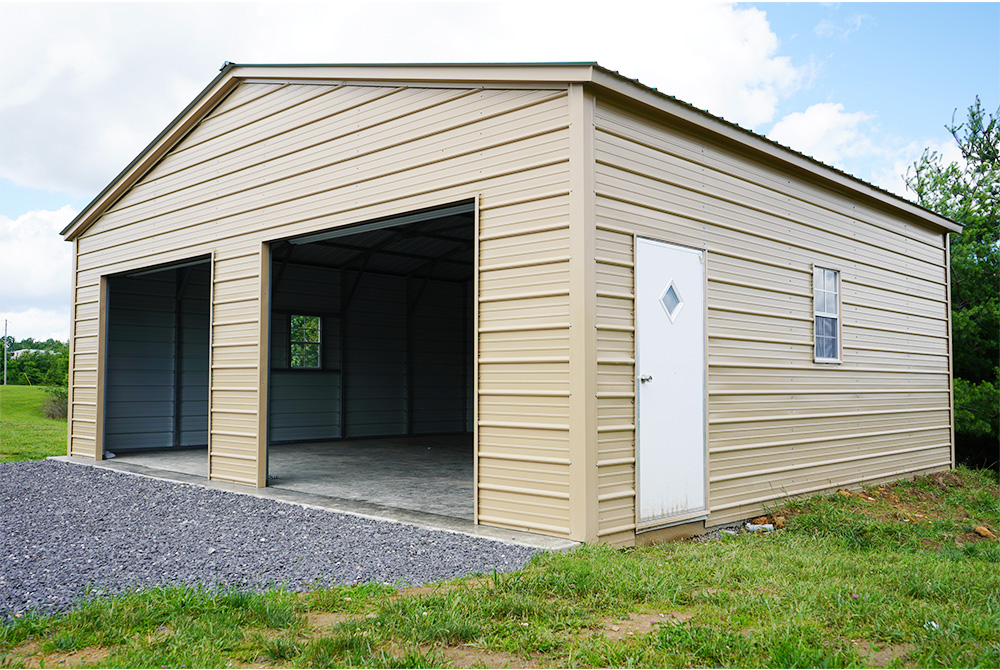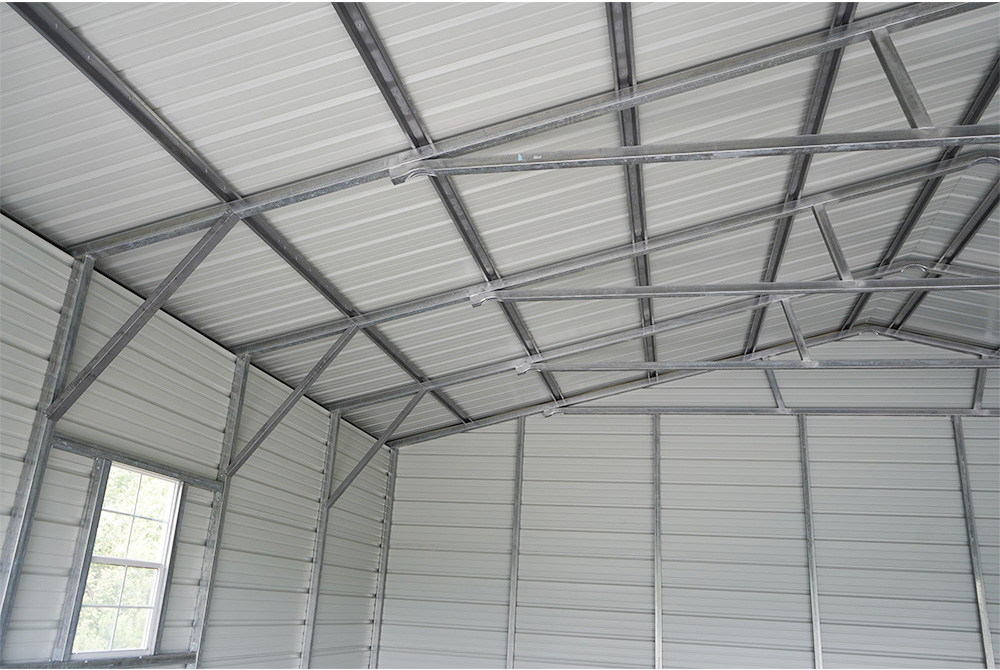

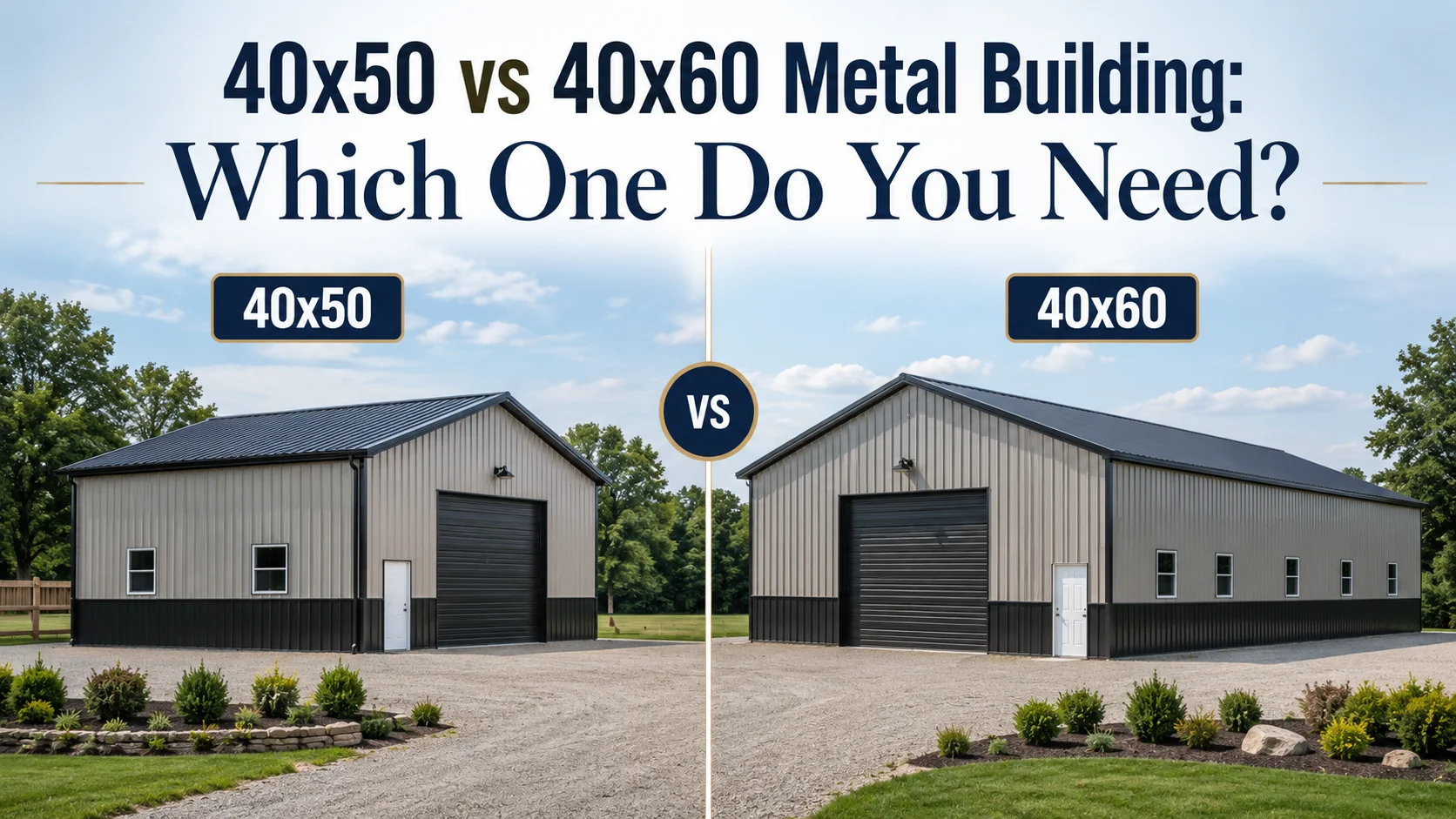
A lot of buyers come into this decision thinking they are comparing two building sizes. That is understandable. A 40×50 and a 40×60 metal building look close on paper. Same width. Same basic shape. One is just 10 feet longer. That 10 feet does not sound like much until the building starts being used. That is where I usually slow the conversation down. Because the question is not just, “Can everything fit?” The better question is, “Will this building still be easy to use once it is full?” That is where the real difference shows up. A 40×50 gives you...
Blog
30th June, 2026

16th April, 2026
Posted In: Garages
TL;DR: A 30x50 garage usually costs more than buyers expect because the building price is only part of the job. The shell, slab, doors, height, roof style, insulation, and site prep all move the number. A basic setup may start in the lower range, but a better-finished 30x50 garage often lands much higher once it’s actually usable. Plan the whole project, not just the building quote. At first, a 30x50 garage sounds easy to price. It’s just a garage, right. Thirty feet wide, fifty feet long, get a quote, pour a slab, done. That’s how most people walk into it....

15th April, 2026
Posted In: Garages
A lot of buyers start in the same spot. They know they need a garage. They know they want enough room for vehicles, some storage, maybe a work area. Then they narrow it down to two sizes: 30x40 or 30x50. That sounds like a small jump. It usually isn’t. On paper, both of these steel garage sizes look big enough. Both sound practical. Both seem like they should handle the job just fine. And if you’re just looking at square footage, it’s easy to think the decision comes down to price and nothing else. That’s usually where people drift off...
2nd March, 2026
Posted In: Garages
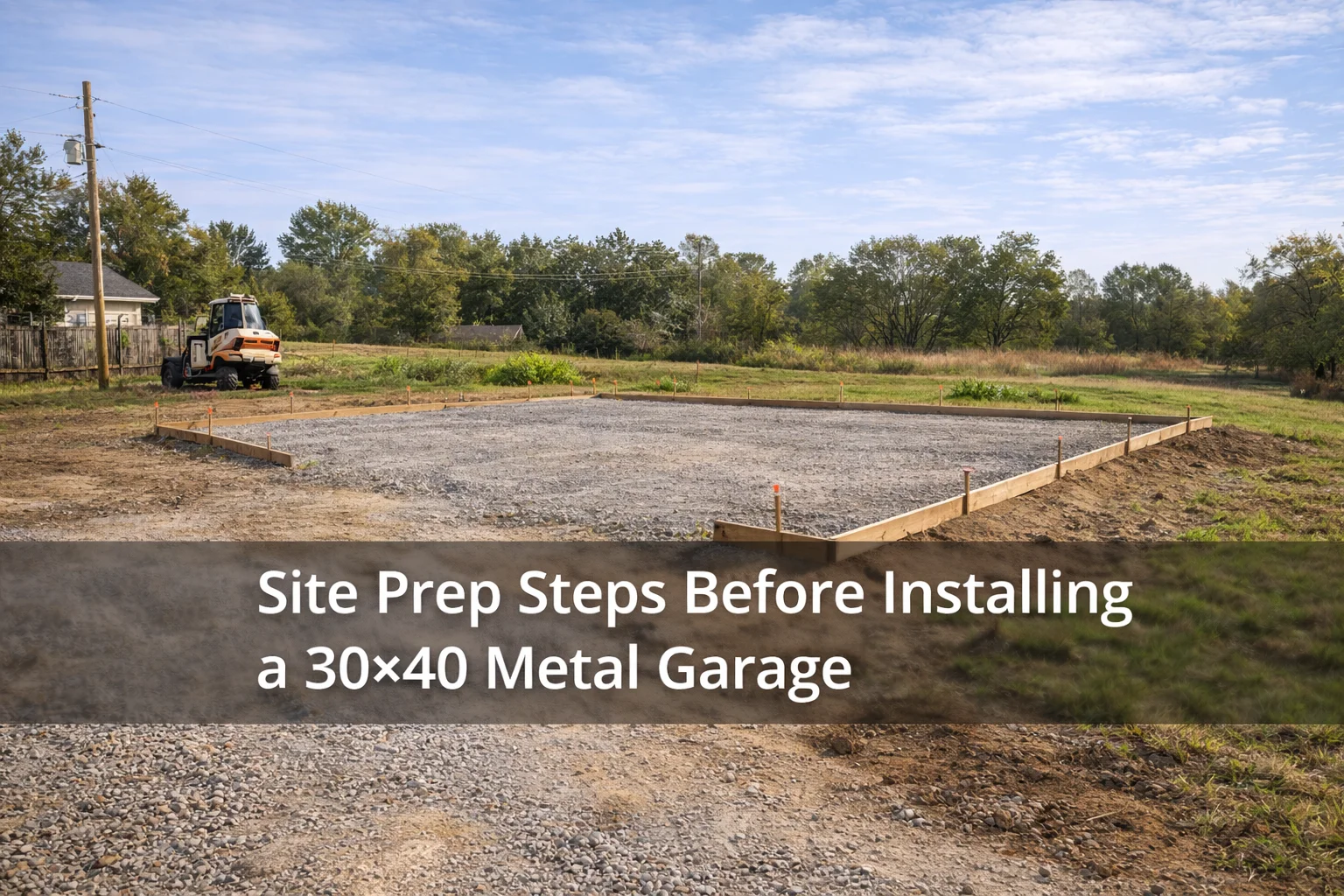
The delay usually isn’t the building Most 30×40 garage delays don’t happen because of the building. They happen because of the site. I’ve shown up to installs where the garage is sitting on the truck ready to go and we can’t unload because the slab is 6 inches off. Or the ground was “leveled” but turns into a swamp after one rain. That’s the stuff that burns time and adds cost. Steel goes up fast when the ground is ready. But when prep is rushed or guessed at, installs get pushed, crews get rescheduled, and sometimes we’re fixing problems before...
18th February, 2026
Posted In: Buildings
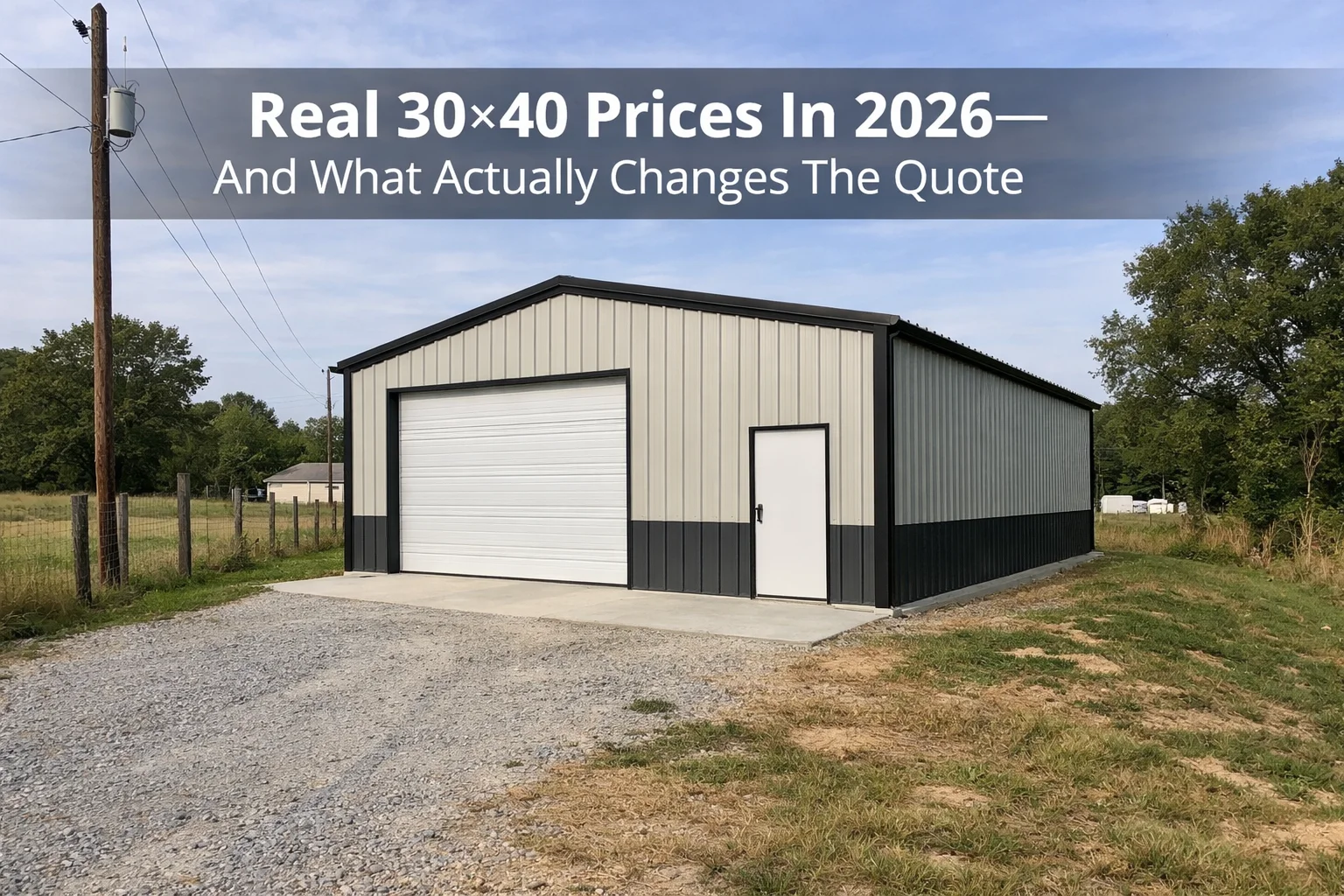
A 30×40 Is Popular For One Simple Reason: It’s The First Size That Feels Like A Real Garage And A Usable Shop. You Can Park Two Vehicles, Still Have A Bench Wall, And You’re Not Walking Sideways Between Toolboxes And Bumpers. And The First Thing People Ask us—Before Roof Style, Colors, Or Anything Else—Is: “What’s A 30×40 Metal Garage Cost In 2026?” Fair Question. But “30×40 Price” Only Means Something If We’re Talking About The Same Scope. One Quote Might Be An Installed Shell With Standard Height And A Basic Door Package. Another Quote Might Be Taller Walls, A Bigger...

13th February, 2026
Posted In: Buildings
You’re staring at that open spot on your property, thinking about a shop, a garage, maybe a place to finally get your equipment under cover. Then you look at a quote that says something like 30′ x 40′ x 12′ vertical roof, two roll-up doors… and it all feels a little flat. Most folks do the same thing: Try to picture it in their head Pace out some rough dimensions in the yard Hope they’re guessing right Sometimes they get lucky. A lot of times, they don’t. I’ve seen people end up with: A building that feels smaller than they...

2nd February, 2026
Posted In: Buildings
How Winter Storms Test the Resilience of Metal Buildings Metal buildings are usually chosen because people want something dependable. Steel doesn’t rot. Frames don’t sag. Most of the year, that strength goes unnoticed. Winter, however, is when it gets tested. Snow doesn’t come and go quickly. Wind doesn’t hit once and stop. Add freezing nights and half-thaws during the day, and even a well-built structure starts dealing with pressure that wasn’t obvious before. Below, we’ll explore how winter storms push your metal building to its limits, and how to prepare yours for Mother Nature’s worst this season. How Winter Storms...

29th January, 2026
Posted In: Buildings
More people are asking a simple question before they invest in metal buildings: What’s this structure going to look like after a few bad seasons? Not the day after it’s built. Five years later. I’ve been on inspections after wind-driven rain and long, sloppy storms where the building didn’t “blow apart.” It just got pushed out of square a little. A roof edge lifted a hair. A door started sticking. Water got in at a seam and kept finding the same path every time it rained sideways. That’s the stuff that turns into real repair work. Metal and wood can...

27th January, 2026
Posted In: Buildings
With the recent wave of severe storms across the U.S., a lot of property owners are taking a fresh look at what they’re asking their buildings to survive. That late-January 2026 system — the one that turned highways into ice rinks, knocked out power in pockets, and piled wet snow and sleet on roofs — is a perfect example. It wasn’t “just winter.” It was weight, wind, and cold that stuck around long enough to expose weak spots. If you’ve got equipment, inventory, animals, tenants, or your own family under that roof, you start thinking differently. You start asking, “If...

15th January, 2026
Posted In: Buildings
If you’re shopping for a metal building, you’ll run into “Risk Category” sooner than you expect—usually right when the building department asks for it on the permit application or the engineer lists it on the design criteria sheet. Here’s the part people miss: Risk Category isn’t a marketing label. It’s a building-code classification that helps set the design criteria for the structure. And if your plans say one thing but the drawings look like something else, that’s when you get a plan-review correction and the project slows down. A building’s Risk Category is the code’s way of classifying structures based...
40x50 vs 40x60 Metal Building: Which One Do You Need?
30x50 Garage Cost Guide: Prices, Options & What to Expect
30x40 vs 30x50 Metal Garage: Which Size Actually Works for You?
Buildings
45
Combo Metal Buildings
1
Commercial Metal Buildings
9
Farm Buildings
7
Garages
12
Hiking
1
Metal Barns
5
Metal Building Foundation
1
Metal Buildings Texas
1
metal buildings with Lean-to
1
Metal Carports
9
Metal Sheds
2
Motorcycle Maintenance
1
Rust Protection
1
RV Cover
3
Steel Buildings
3
Storage Buildings
7
Summer
1
Swimming Pool
1
Winter
1
Work From Home
1