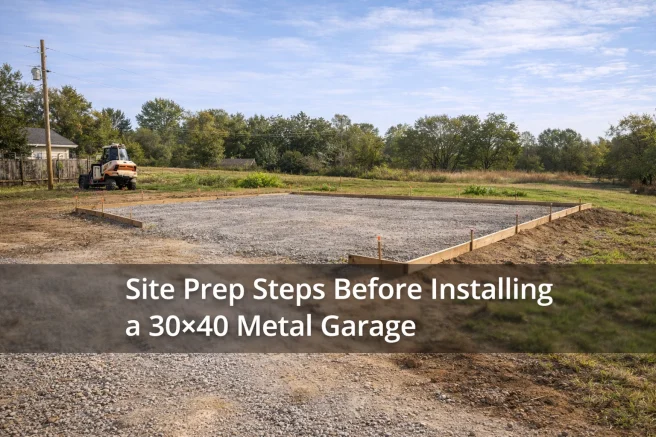

I hear this one a lot after somebody lays it out in the driveway with stakes and string: “Does a 30×40 feel like a real shop… or am I going to regret it?” On paper, 1,200 square feet sounds massive. Then you picture a pickup, a side-by-side, a mower, a workbench, and a shelf line. And suddenly you’re asking where you’re supposed to walk.
Here’s the thing: most people don’t regret the building when it’s empty. They regret it once they live in it. They buy a taller tractor. They add a trailer. They decide they want a lift. Or they start stacking “temporary” stuff inside because it’s dry. Temporary turns permanent fast. So you’re not just choosing a footprint. You’re choosing how you’ll move, store, and work for the next decade.
30×40 vs 40×60 Metal Building (Space, Typical Cost Spread, Best Fit)
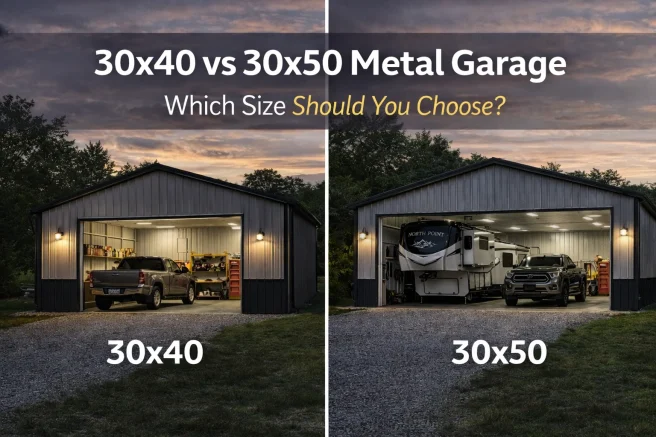
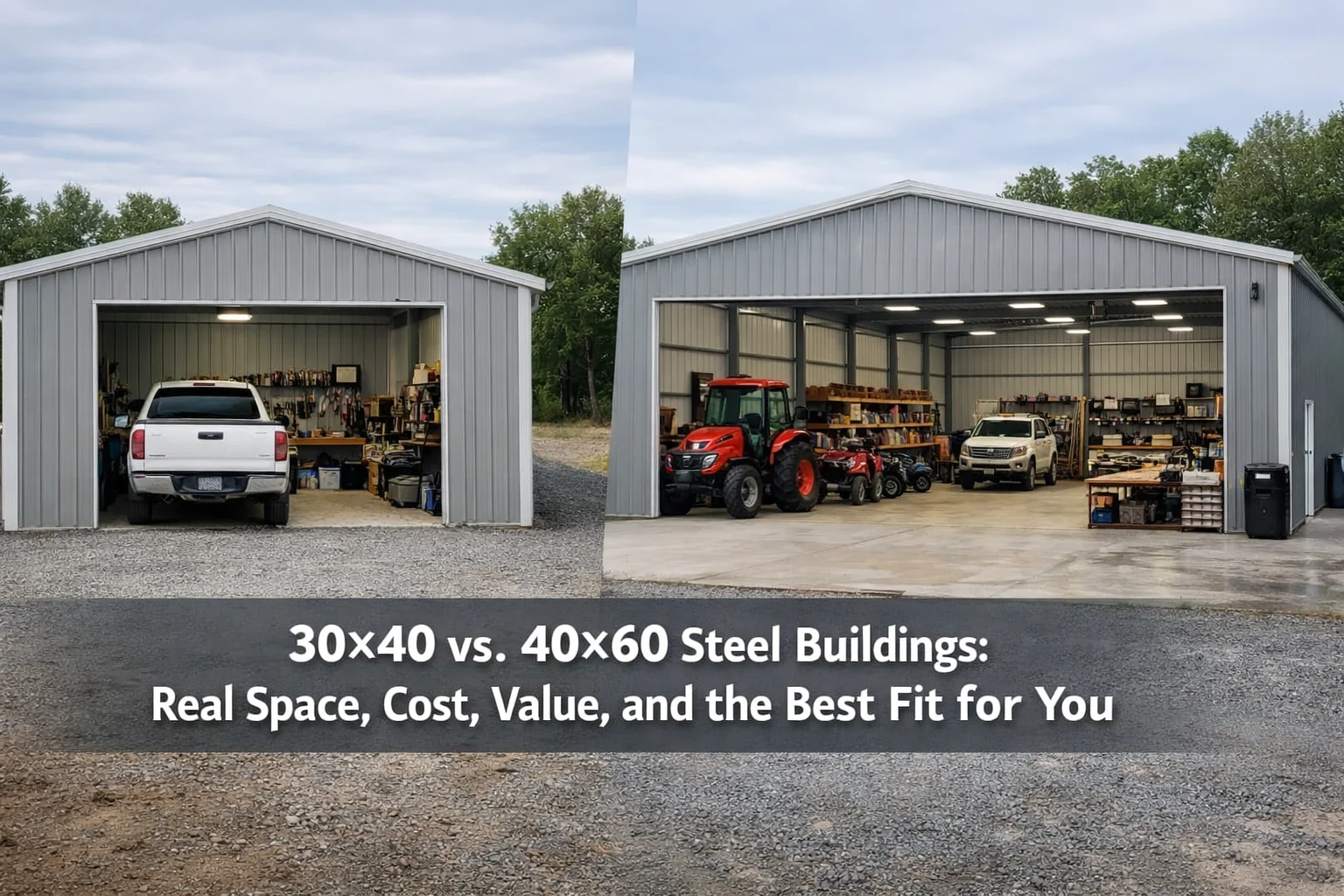
A 30×40 gives you 1,200 sq ft; a 40×60 gives you 2,400 sq ft (double the space). In my quotes, a comparable 40×60 often ends up about 1.6–2.0× the total spend once you match height, doors, slab, and sitework, while the cost per square foot usually drops. Choose 30×40 for storage and light shop use. Choose 40×60 for equipment, workflow, and fewer “we’re out of room” fixes later.
How 30×40 and 40×60 Metal Buildings Feel in Real Life (Parking, Work Bays, Storage Flow)
30×40 Metal Building Layout (1,200 sq ft)
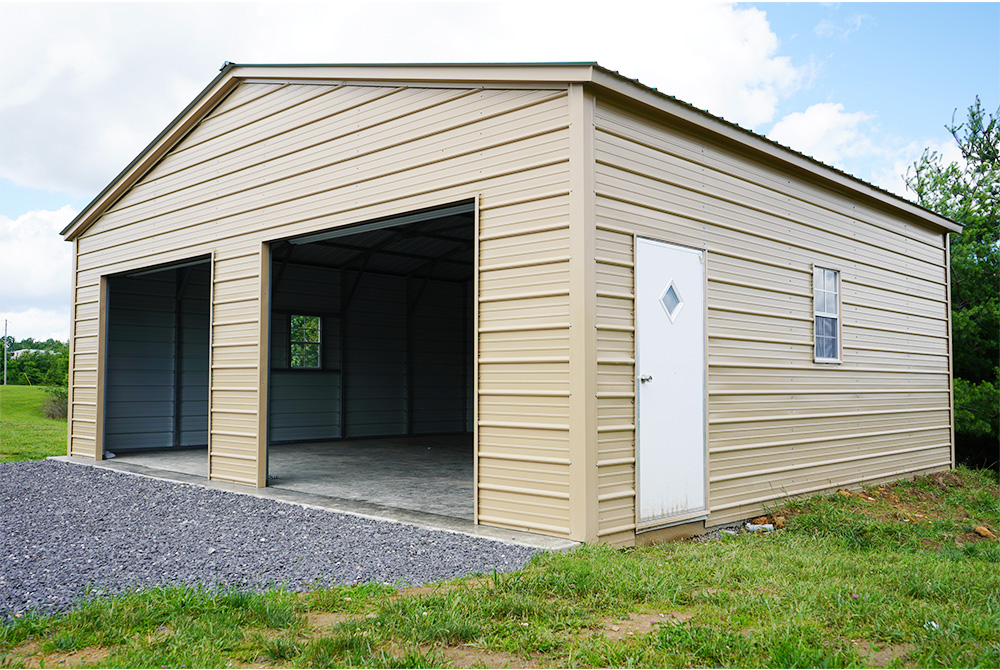
A 30×40 metal building feels like a big garage that can do shop duty if you keep the layout tight and you don’t overstuff the walls.
- Vehicles: Two full-size pickups fit, but you won’t love the door-swing and walk-around space once you add shelving. One pickup + a real work bay feels better.
- Work zones: A bench wall, a tool chest, and a welding table can work. Big projects will take over the center fast.
- Storage flow: Wall shelving eats floor space quicker than people think. If you run 24″–30″ deep shelves on both long walls, you just shrank your “open” width a lot.
- Walk-around space: You’ll feel fine until you park something and leave a project out. Then you start moving things just to reach other things.
40×60 Metal Building Layout (2,400 sq ft)
A 40×60 metal building starts feeling like you can run lanes: park here, work here, store there. You don’t babysit your floor space every time you pull in.
- Vehicles: Three vehicles becomes realistic depending on layout. Two vehicles plus equipment storage feels comfortable.
- Work zones: You can keep one bay “always a shop” and still have a clean lane to move through.
- Storage flow: You can place shelves where they make sense, not where you can squeeze them. You can keep long material straight instead of stacked in a corner.
- Walk-around space: You keep clear paths. Tool carts roll. Trailer tongues turn. You don’t bang your hip on a workbench every time you pass.
When a 30×40 Metal Building Is Enough (And When It Isn’t)
When a 30×40 works well
A 30×40 works when you want covered storage and you do projects that don’t require leaving everything spread out.
- You store a couple vehicles and some equipment.
- You want a bench area, not a full-time production-style workflow.
- You plan one main overhead door and you don’t need drive-through traffic.
- Your site or setbacks make a bigger footprint a headache.
If you keep the walls from turning into a junk museum, 1,200 sq ft can feel solid.
When a 30×40 starts to feel tight
But you’ll feel out of space soon if you add any of these:
- A lift plan. Even if you don’t buy it today, you’ll care about clear floor space and height the minute you start thinking about it.
- A tractor with attachments left on. Implements make everything longer and wider than the machine alone.
- Long material storage. Lumber, pipe, sheet goods—those want straight lanes, not corners.
- Deep shelving everywhere. Two rows of deep shelves plus “stuff on the floor” is how a 30×40 becomes a maze.
Who usually outgrows a 30×40
Most people outgrow 30×40 when they:
- Maintain multiple vehicles or equipment at the same time
- Start using the building weekly, not occasionally
- Add a trailer and want it inside, not beside the building
Real-world mistake I see: People plan the footprint and forget door clearance and wall storage. Then they add shelves after the fact and act surprised that the building “shrunk.” It didn’t shrink. You gave the floor away.
When a 40×60 Metal Building Is the Smarter Call (Workflow, Equipment, Resale Flex)
A 40×60 makes sense when you want the building to function like a shop, not like a storage unit with a workbench jammed in.
Why buyers step up to a 40×60
- They want a dedicated work bay that stays set up.
- They store equipment and don’t want to shuffle it every time.
- They want more than one door so traffic flows instead of bottlenecking.
How a 40×60 changes daily workflow
You are never short of space. You can leave a project laid out, keep tools where they belong, and still park inside. That’s the difference between working in the building and working around the building.
Why 40×60 cost per square foot often drops
Some costs add to your building’s final price no matter what size you build—mobilization, framing openings, engineering, and whatever the site makes you do. So the 40×60 costs more overall, but the smaller one doesn’t always “win” like people assume once you match height, doors, and slab.
What people overlook about a 40×60 steel building
Bigger buildings tempt you into upgrades that add real money:
- More and bigger doors
- More concrete
- Higher eaves, which changes door options and sometimes insulation choices
Note: If you already own equipment, plan to keep the building 10+ years, and you’re tight on space now, 40×60 usually saves you from the most common regret—building too small.
Quick gut-check (use this):
- Do you own (or plan to buy) a tractor with attachments, skid steer, or a larger trailer?
- Do you want to park inside and still keep a work bay set up?
- Do you hate moving one thing just to reach another thing?
- Do you want a lift someday, even “maybe”?
If you answered yes to two or more, most folks end up happier in 40×60.
Metal Building Cost Drivers: Why Size Alone Doesn’t Set Your Total Price
Size matters, but it doesn’t run the whole cost. I’ve seen a smaller building cost more than a bigger one because the site fought back or the spec got heavy.
Why 30×40 vs 40×60 pricing isn’t just square footage
A 30×40 building with taller eaves, heavy insulation, several framed openings, and a beefy slab can outrun a basic 40×60 metal building fast. You have levers you can pull—height, door count, slab spec, and how finished you want it inside. That’s where budgets drift.
Cost drivers that matter more than building size
- Sitework: clearing, grading, drainage fixes, truck access, cut/fill
- Concrete: slab thickness, thickened edges, vapor barrier, rebar, control joints
- Height: 12′ vs 14′ vs 16′ eaves changes more than people expect
- Doors: overhead size/quantity, framed openings, openers, placement
- Insulation & condensation control: what you need depends on how you use the building
- Wind/snow code requirements: local exposure and loads can change the structure details
- Utilities: trenching power, water, interior rough-in, compressor/welder needs
Upfront spend vs long-term value (what owners wish they’d done)
I’ve watched people “save money” by selecting a smaller building, then spend years wishing they’d bought another 10 feet of width. Extra space up front often costs less than an add-on, a redo, or storing expensive equipment outside.
| Size | Typical use fit | Flexibility over time | Expansion risk |
|---|---|---|---|
| 30×40 | Storage + light shop corner | Moderate if you stay organized | Higher (easy to hit the “too small” wall) |
| 40×60 | Shop workflow + equipment + storage lanes | High (easy to reconfigure) | Lower (less pressure to add on soon) |
Small spec snapshot (no pricing, just reality):
- A lot of storage-only buildings land around 12′ eave.
- If you’re thinking lift/stacking/taller equipment, you often start looking at 14’–16′ eave.
- Slabs commonly start around 4″, but heavy equipment, lifts, or point loads can push you toward 6″ with better reinforcement. Don’t guess. Plan it.
Details That Decide Whether You Love the Building: Eave Height, Door Layout, Equipment Growth, Expansion
Eave height and clearance planning
People obsess over 30×40 vs 40×60 buildings and barely talk height. Then they buy taller equipment or start thinking about a lift. If there’s a chance you’ll want a lift someday, plan height and door clearance first. I’d rather you decide “no lift” on purpose than discover “no lift” by accident.
Overhead door placement
Door count matters, sure. Placement matters more. I’ve seen guys put the only overhead door where it “looked right,” then every trailer move turns into a multi-point turn because the approach angle doesn’t line up.
A layout works better when you can:
- Pull straight in without a three-point turn
- Keep a clear lane past storage
- Open doors without hitting shelving or a bench
- Line up at least one overhead door with how you actually drive in
Real detail people miss: Door size isn’t just width and height. It’s also what you can do without scraping mirrors, folding ROPS, or taking attachments off outside.
Planning for future equipment
You don’t need to own the future tractor today to plan for it. Measure what you might own: overall height, width with attachments, and turning radius. Attachments create the “surprise” more than the machine does.
How storage turns into a shop
A lot of buyers start with “I just want storage.” Two months later they add a bench, shelves, a compressor, and a project that lives on the floor. If your layout can’t handle storage + work without blocking parking, you’ll feel it every weekend.
Expansion later: what can make it harder than expected
“Can I expand later?” sometimes means “I’m trying to talk myself into smaller.” Add-ons can work, but setbacks, roof tie-ins, and matching height can make it harder than people expect. If you think expansion is likely, design the original building like it expects it. Don’t make it a surprise to your future self.
Common Regrets With 30×40 and 40×60 Metal Buildings
- Built too small. It felt fine empty. It felt tight once shelves, tools, and projects moved in.
- Didn’t plan doors. The door “fit,” but every move became annoying.
- Picked the wrong height. Too short for a lift, tall equipment, or comfortable storage.
- Underestimated concrete and sitework. The slab and the dirt work can swing the total hard.
- Didn’t think about resale or reuse. Weird door layouts and low height narrow who wants it later.
30×40 vs 40×60 Metal Building FAQs
Is a 30×40 big enough for two cars and a workshop?
Usually, yes—if “workshop” means a bench and tools along one wall. If you want projects laid out and still want easy parking, it gets tight.
Is a 30×40 big enough for a tractor?
Sometimes. Door height and attachment width matter more than people think. Measure the tractor with what you actually leave on it.
Is 40×60 overkill for personal use?
Not if you store equipment, keep trailers inside, or want a real work bay. It only feels like overkill when you keep it empty.
Which size holds value better?
A 40×60 tends to fit more uses—equipment storage, hobby shop, small business, farm support. That wider usefulness usually helps.
Can I expand a 30×40 later?
Often yes, but setbacks and tie-ins can complicate it. Plan for expansion up front if you think it’s likely.
What door sizes should I plan for?
Start with what you need to drive in without drama, then add clearance for the next bigger item you’ll probably buy. Most regrets come from doors that “technically” work but feel tight every time.
Should I choose width or length if I can’t increase both?
If you work inside, extra width usually feels better because it gives you lanes and walk-around space. If you store long items, length can matter more.
Does a bigger building cost more to heat and cool?
If you condition the whole space, yes. But insulation, ventilation, and whether you heat the entire building or just a work zone matter a lot.
Should You Build a 30×40 or 40×60 Metal Building?
If you want a clean way to decide, stop thinking “storage vs storage.” Think “storage plus how I move.”
Choose 30×40 if you want covered storage, you do light shop work, and you’re okay with tighter lanes once shelves and projects show up. It works best when you keep the walls organized and the floor open.
Choose 40×60 if you want a real workflow: park inside, keep a work bay set up, store equipment without shuffling, and still have room to move. It’s also the safer bet if you plan to own bigger equipment later.
One rule of thumb: if your sketch looks tight with today’s stuff, it will feel cramped once you add shelving and one new toy. If you’re already “making it work” on paper, 40×60 usually feels like relief.
Need Help Before Ordering Your 30×40 or 40×60 Building?
If you’re stuck between a 30×40 and a 40×60 steel building, or you’re not sure where the doors and height should be placed, call experts at American Metal Buildings. We sell custom steel buildings nationwide, and we’ll help you size it the right way based on what you’re actually storing and how you plan to use the space.
Tell us what you’ve got (vehicles, trailers, equipment, future plans) and we’ll walk you through the whole process—selection, design, delivery, and installation—so you don’t pour concrete and realize you guessed wrong.
 Perplexity
 ChatGPT