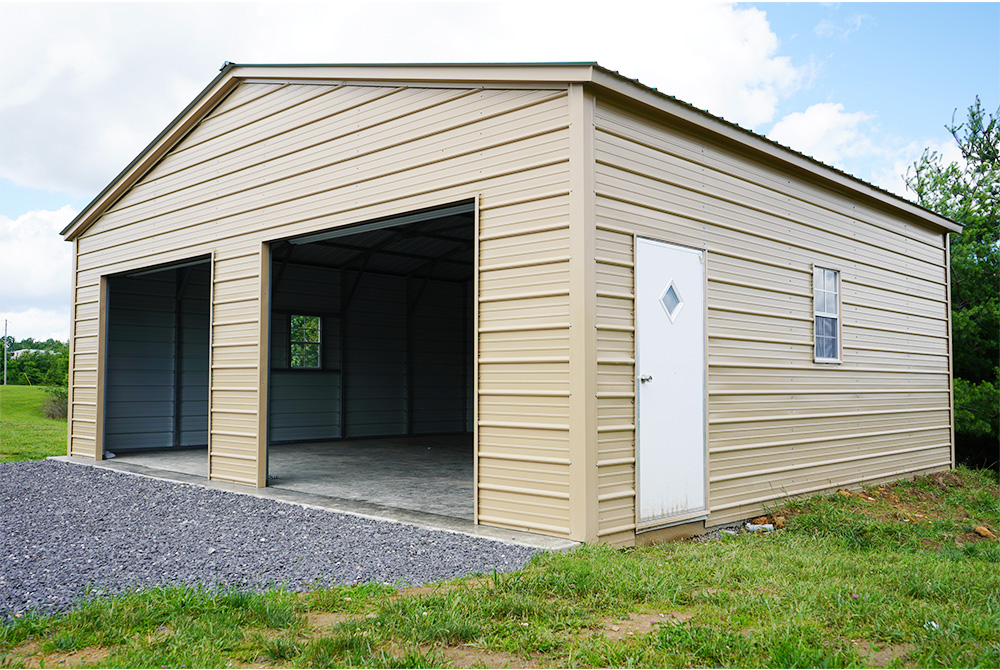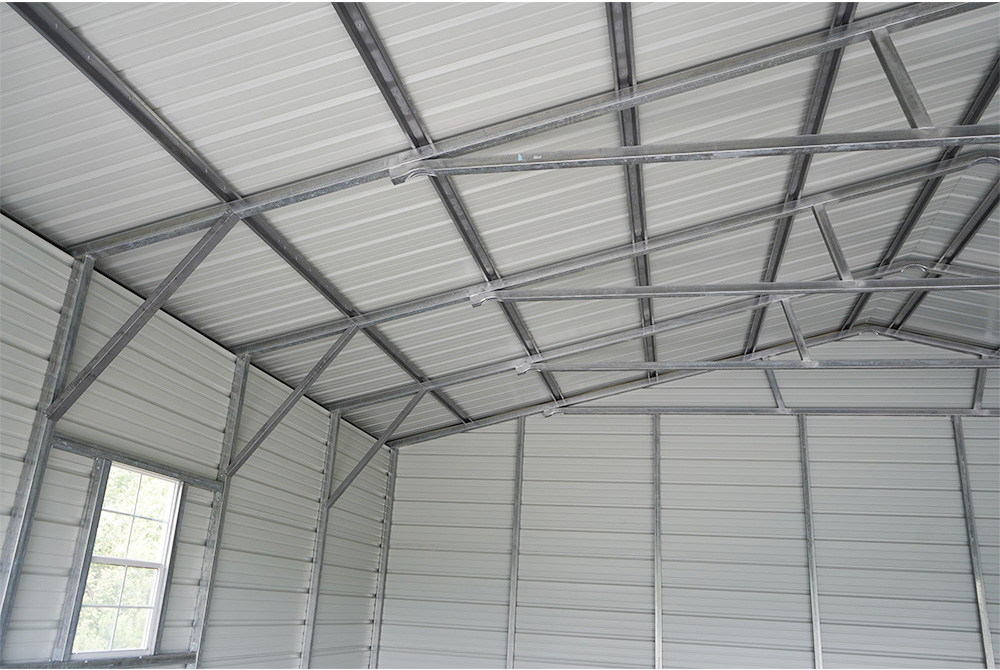

A 40×50 metal building sounds roomy until you start placing real things inside it.
I’ve had customers look at 2,000 square feet on paper and say, “That’ll be more than enough.” Sometimes they’re right. Sometimes they call back later wishing they had thought harder about door placement, sidewall height, or where the storage was going to land. The mistake usually isn’t choosing a 40×50. It’s treating the building like an empty rectangle instead of a place they’ll use every week.
A building feels big on the day it’s installed.
Then come the trucks, mower, trailer, toolboxes, shelves, spare tires, workbench, ladders, seasonal bins, and the stuff nobody wants in the house anymore.
That’s when the real size shows up.
Quick Answer: How Much Space Is a 40×50 Metal Building?
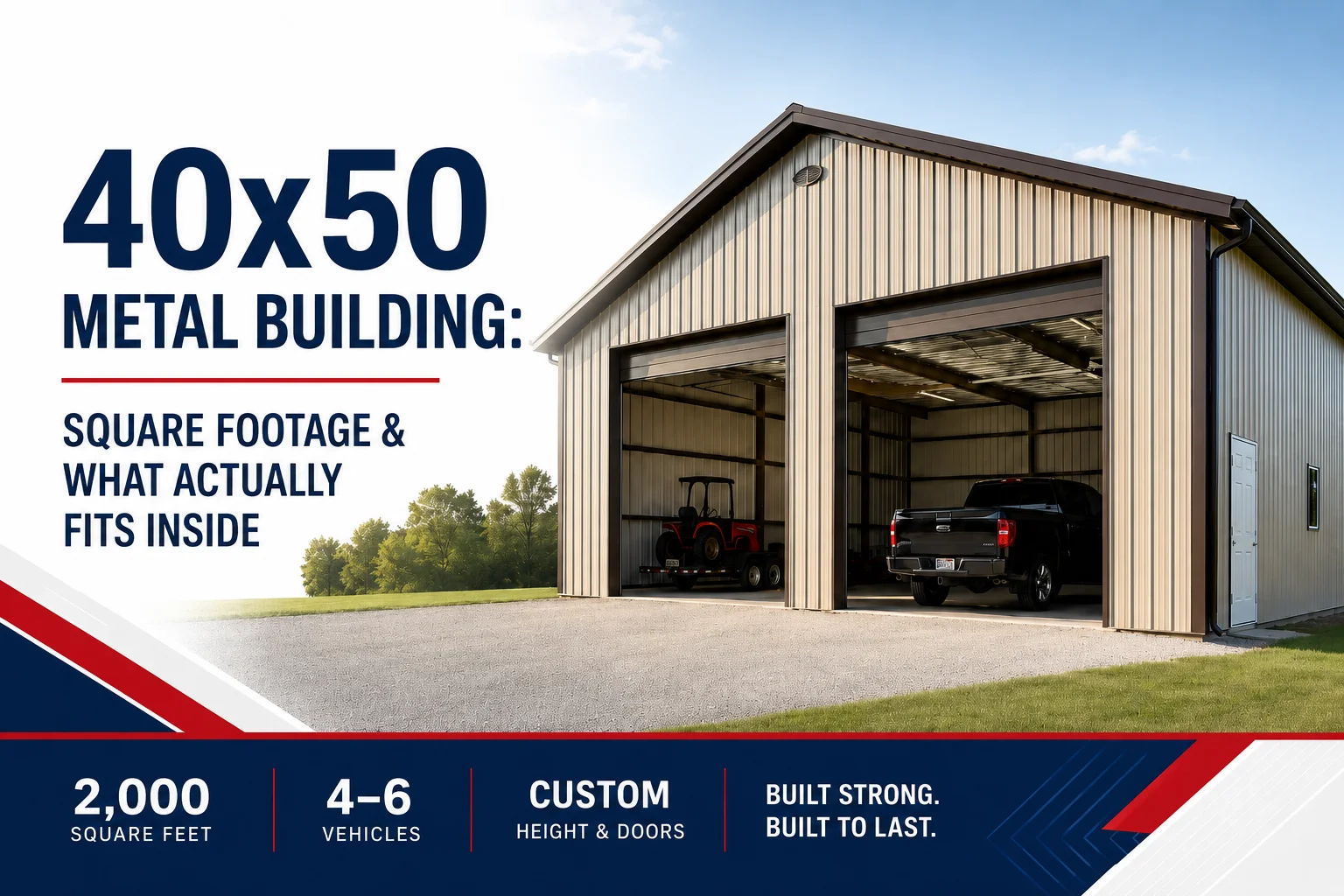
A 40×50 metal building gives you 2,000 square feet of floor space. It can usually fit 4 to 6 standard vehicles, or 2 to 3 vehicles with a workshop and storage area. It can also work for RV storage, farm equipment, contractor tools, small business storage, or a mixed-use garage if the layout, door sizes, height, and access points are planned properly.
Before You Plan a 40×50 Building, Check These Things
- What is the tallest vehicle, RV, or equipment you may store?
- Will you use the building daily or mainly for storage?
- Do you need one large roll-up door or multiple smaller access points?
- Will you need workbench space, shelving, or tool storage?
- Can a trailer or RV back into the building without fighting the driveway?
- Will you add power, lights, insulation, or plumbing later?
- Do you need extra wall height for a lift, RV, or tall shelving?
- Are you planning for what you own now or what you may own in five years?
What Actually Fits Inside a 40×50 Metal Building?
A 40×50 building gives you a good amount of room, but it isn’t endless room.
That’s the part buyers sometimes miss.
You can fit several vehicles inside, sure. But a useful building is not just about fitting things in. You still need to walk around them, open doors, pull tools off the wall, move a mower out, back in a trailer, unload supplies, or work on a project without dragging everything into the driveway.
The vehicles usually aren’t the problem.
The storage is where things get tight.
A standard car may take up less than 200 square feet sitting still, but that number doesn’t include door swing, walking room, shelves, or the space you need to move around it. A pickup truck needs more breathing room, especially if you want to open the tailgate. An RV changes the whole plan because height and door clearance become just as important as floor space.
Here’s a practical way to look at it.
| Use Case | What Usually Fits | What to Watch |
|---|---|---|
| Vehicle storage only | 4 to 6 cars or smaller vehicles | Tight if vehicles move often |
| Daily garage | 3 to 4 vehicles | Better room for doors and walking |
| Garage + workshop | 2 to 3 vehicles plus work area | Keep one work zone open |
| RV storage | 1 large RV plus gear or shelves | Height and door size matter |
| Farm/ranch use | Tractor, mower, ATV, trailer, supplies | Access order matters |
| Contractor storage | Tools, materials, truck, trailer | Loading flow matters |
| Small warehouse use | Inventory, racks, equipment | Plan aisle space early |
That table is not perfect, because buildings don’t get used perfectly.
Someone may start with two trucks and a workbench. Six months later, there’s a side-by-side, a utility trailer, two ladders, a welder, and three pallets of materials. It happens all the time.
The Building Feels Different After the Walls Fill Up
Nobody worries about wall space until they start using the building.
On move-in day, the middle of the building looks huge. Then the wall space starts getting claimed. One wall gets shelves. Another gets the workbench. The back wall gets storage bins. The corner gets the compressor. Ladders lean somewhere. Rakes and shovels hang up. Spare parts go on a rack.
Before long, the floor still measures 2,000 square feet, but the usable space feels different.
I once worked with a customer who planned a 40×50 mostly for a truck, a boat, and a small shop setup. On paper, it looked easy. A year later, the boat was still fine, the truck still fit, and the shop was working. The issue was everything around them. Fishing gear, coolers, tires, lawn tools, and shelves had taken over the side walls. He didn’t need a bigger building as much as he needed a better storage plan from the start.
That’s a small difference, but it matters.
A building can be large and still feel crowded if the layout is lazy.
Door Sizes Can Make or Break the Layout
Most folks don’t measure door clearance until it’s too late.
They think about width and length first. That makes sense. But the roll-up doors decide how the building works every day.
For a 40×50 metal garage, a 10-foot-wide door may work for a standard vehicle. A 12-foot-wide door feels better for trucks. A 14-foot-wide door gives more room for trailers, RVs, and less careful backing. Door height depends on what you’re storing. Cars don’t need much. RVs, lifted trucks, work vans, and equipment do.
Here’s the thing: a door that technically fits can still be annoying.
If you have to fold mirrors every time, line up perfectly, or ask someone to guide you in, that door is too tight for daily use.
For many 40×50 buildings, two overhead doors make more sense than one. One door can serve the vehicle bay. Another can serve equipment or shop access. A walk-in door near the work area is also worth thinking through. Nobody wants to open a big roll-up door every time they need a screwdriver.
Door placement matters too.
A door on the 40-foot end wall creates a deep garage feel. That works well for RVs, trailers, and straight-in parking. A door on the 50-foot side wall can work better for multiple bays, side-entry parking, or a shop layout where equipment moves in and out from different areas.
The right answer depends on the driveway.
Not just the building.
Height and Clearance Are Future Decisions
A 40×50 with 10-foot sidewalls and a 40×50 with 14-foot sidewalls are two different buildings in real use.
Same floor size.
Different possibilities.
If you only store cars, lawn equipment, and basic household items, a lower height may work fine. If you might add an RV, vehicle lift, tall shelving, tractor, commercial van, or enclosed trailer, extra wall height is worth talking about early.
Height affects:
- Roll-up door height
- RV clearance
- Interior airflow
- Lighting placement
- Storage rack height
- Vehicle lift options
- Equipment access
- Future resale usefulness
That last one is not always discussed, but it should be. A taller building gives the next owner more options too.
I don’t tell every customer to go tall. That would be lazy advice. But I do tell them not to choose height based only on what is parked in the driveway today.
People’s storage needs grow.
Their hobbies grow.
Their equipment changes.
A little extra clearance can keep the building useful longer.
Workshop Use Needs Open Space, Not Just Tool Space
A 40×50 workshop can be a great setup.
But it needs open working room.
That sounds obvious until you see how fast people fill the edges. The workbench goes in. Then a cabinet. Then shelves. Then a toolbox. Then a welding table or saw. Then a project vehicle sits in the middle.
Now the shop technically fits, but it doesn’t work comfortably.
A good workshop layout usually needs one area that stays open on purpose. Not leftover space. Planned space.
If you work on vehicles, leave room around the bay. If you cut lumber, think about feed space. If you weld, don’t put everything tight against flammable storage. If you use a compressor, place it where the noise and hose reach make sense. If you use a lift, the slab, ceiling clearance, and door placement need to be planned before anything is installed.
A lot of buyers plan for tools.
Fewer plan for the work happening around the tools.
That’s where frustration comes from.
RV Storage Needs More Than Length
RV owners tend to measure length first.
That’s only part of it.
A 40×50 can hold many RVs, but the sidewall height, door height, door width, and driveway approach need to work together. Rooftop AC units, vents, ladders, and antennas count. If the RV clears the door by only an inch or two, that’s not comfortable. That’s a future headache.
You also need side clearance.
RV owners open compartments, load gear, check tires, clean the sides, work around hookups, and move supplies in and out. If the RV fits but everything is tight around it, the building becomes harder to use than expected.
For RV storage, I’d rather see fewer things packed around the RV and more room to walk.
That space is not wasted.
It’s what makes the building usable.
Roof Style, Gauge, and Materials Matter Over Time
A lot of people choose roof style based on looks or price.
After a few storms, they understand why the roof matters.
On a 40×50 building, roof design plays a larger role than it does on a small carport. You have more roof area, more water movement, more wind exposure, and more long-term wear. A vertical roof is often a smart choice because the panels run from the peak down toward the eaves, helping rain, snow, and debris move off more naturally.
Regular and boxed-eave styles can still make sense in certain settings, especially for budget-focused builds or lighter use. But if the building protects vehicles, tools, RVs, business inventory, or farm equipment, I usually want the roof decision treated as part of the ownership plan, not just the quote.
Gauge matters too.
Framing gauge, panel gauge, anchors, and certification requirements should match the building’s location and use. A building in a mild area with basic storage needs is not the same conversation as one in a high-wind area, snow region, or commercial-use setting.
Don’t buy steel like you’re buying paint color.
The specs matter later.
What Changes the Cost of a 40×50 Metal Building?
The size is only the starting point.
Two 40×50 buildings can have very different prices because they may be built very differently.
| Cost Factor | Why It Changes the Price |
|---|---|
| Wall height | Taller walls need more material and change door options |
| Roof style | Vertical roofs usually cost more than basic styles |
| Gauge and framing | Heavier materials affect strength and price |
| Doors and windows | Larger and extra openings add cost |
| Insulation | Adds comfort and moisture control, but raises price |
| Certification | Wind/snow ratings can affect engineering and materials |
| Concrete slab | Thickness, grading, and finish change cost |
| Site prep | Leveling, drainage, and access may add work |
| Electrical/plumbing | Easier to plan early, but still adds budget |
A bare 40×50 storage building is not the same as a 40×50 insulated RV garage with a slab, large doors, electrical, and certified framing.
That’s why I don’t like giving one flat answer for cost without knowing the use.
The cheaper building may be fine.
Or it may be the one you spend money fixing later.
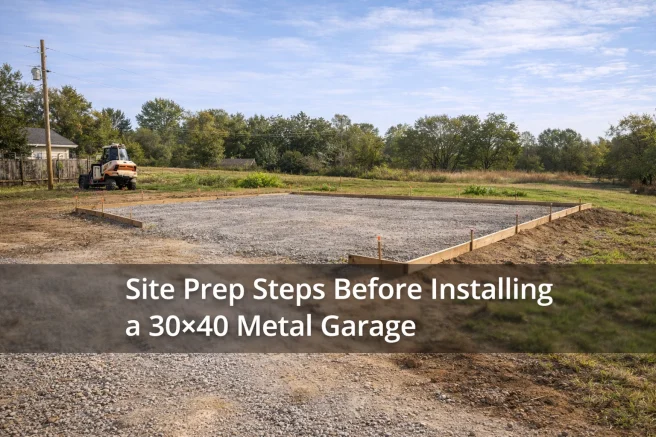
Concrete and Site Prep Deserve Early Attention
The slab is not just something the building sits on.
It affects daily use.
For a 40×50 garage, workshop, or RV building, the concrete needs to match the weight and movement inside. A basic slab may work for vehicles and storage. Heavy equipment, lifts, commercial use, or large RVs may call for more thought.
Drainage matters too.
Water should move away from the building. The apron in front of the doors should give enough room for backing in and unloading. If you plan to wash vehicles, use floor drains, run plumbing, or install power through the slab, those decisions need to happen before the pour.
Concrete is not the place to guess.
Site access also matters. A perfect building in a tight spot can still be frustrating. Walk the property like the building is already there. Picture the RV backing in. Picture the trailer turning. Picture rainwater moving. Picture carrying tools from the house. That little exercise catches problems a drawing can miss.
Insulation, Condensation, and Electrical Planning
Condensation surprises a lot of owners.
They think metal building, strong shell, good roof, done.
Then temperature swings show up. Moisture collects. Tools feel damp. Boxes soften. Stored items don’t age as well as expected.
Not every 40×50 needs full insulation, but condensation control should be considered if you’re storing tools, vehicles, inventory, feed, furniture, documents, or anything that doesn’t like moisture. If you’ll work inside often, insulation also helps with comfort.
Electrical planning is similar.
A storage-only building may need basic lighting and a few outlets. A workshop needs more. RV storage may need a dedicated plug. A contractor shop may need exterior lights, tool outlets, security cameras, battery charging, and brighter interior lighting.
Plan the main work zones before wiring.
It’s much easier than adding power after every wall is full.
Common Mistakes I’d Try to Avoid
A few mistakes show up again and again.
- Choosing the lowest wall height because it saves money, then needing more clearance later.
- Putting the main door where it looks centered instead of where the driveway works.
- Forgetting that trailers need turning room outside the building.
- Counting vehicle capacity without counting door swing.
- Planning storage along every wall and leaving no clean work area.
- Ignoring electrical until after the building is packed.
- Skipping insulation or condensation control in a building that will hold tools, vehicles, or inventory.
- Not checking local rules, setbacks, wind ratings, or snow load requirements early enough.
None of these mistakes are unusual.
They happen because buyers are looking at the building before they’ve lived with it.
Real Buyer FAQs About 40×50 Metal Buildings
How many square feet is a 40×50 metal building?
A 40×50 metal building has 2,000 square feet of floor space. That space can be used for vehicles, workshop areas, RV storage, farm equipment, business storage, or a mix of uses depending on the layout.
How many cars fit in a 40×50 garage?
A 40×50 garage can usually fit 4 to 6 standard cars if it is used mainly for parking. For daily use, 3 to 4 vehicles feels more practical because you still need room to walk, open doors, and store items.
Is a 40×50 metal building big enough for an RV?
Yes, a 40×50 can work well for RV storage if the wall height and roll-up door size are right. Always measure the RV’s full height, including rooftop AC units and vents.
What size roll-up door do I need for a 40×50 building?
It depends on what you’re storing. Standard vehicles may work with smaller doors, but trucks, trailers, RVs, and equipment usually need wider and taller doors. Many buyers prefer 12-foot or 14-foot-wide doors for easier access.
Can a 40×50 building be used as a workshop?
Yes. A 40×50 works well as a workshop if you protect open floor space. Plan for workbenches, tools, storage, lighting, outlets, and room to move around projects.
Is a 40×50 metal building good for farm equipment?
Yes, it can be a good size for tractors, mowers, ATVs, trailers, feed, and tools. The main thing is keeping frequently used equipment near the door instead of burying it behind seasonal items.
What affects the price of a 40×50 metal building?
Price depends on wall height, roof style, gauges, doors, windows, insulation, certification, slab work, site prep, and location. A basic storage building costs less than an insulated, certified, taller RV or workshop setup.
Do I need insulation in a 40×50 metal building?
Not always. But if you plan to work inside, store tools, protect vehicles, reduce condensation, or keep inventory in better condition, insulation is worth considering early.
What is the biggest planning mistake with a 40×50 building?
The biggest mistake is planning only for what fits inside today. A good layout should allow movement, storage growth, future equipment, door clearance, and comfortable daily use.
Final Thought
A 40×50 metal building is a useful size because it sits in that middle ground.
Big enough for real storage, real work, and real equipment.
Not so large that it feels like a commercial warehouse on a residential or farm property.
But the size by itself does not make it right.
The layout does.
Think about how you will move inside the building. Think about the tallest thing you may own later. Think about where the doors should go, where the tools will live, and what needs to stay easy to reach.
That is how you avoid owning 2,000 square feet that still feels tight.
If you want help planning a setup that actually fits how you work, our team at American Metal Buildings can walk you through it without overselling anything.
 Perplexity
 ChatGPT