

Metal Building Colors Play a Bigger Role Than You Think
Choosing colors for a metal building sounds simple, but it’s one of those details that quietly defines everything. The right color combo makes a building look sharp, stay cooler, and hide years of wear. The wrong one can fade fast, show every dent, or just feel off once it’s up.
The color isn’t just about style. It decides how hot the building runs in summer, how often you’re out there washing dirt off the walls, and how long that paint job actually holds up.
In here, we’ll show you what colors people are actually using right now, which ones make sense in which climates, and how to avoid that “looked great on the swatch, not on the building” problem.
We’re also pulling in real job-site lessons from actual installs. You’ll see what works for hot, dusty farm roads, coastal salt air, and snow country (where dark roofs earn their keep). You’ll also see why certain color/finish combos cost more up front but save you work (and sometimes money) over the next 20–30 years.
Quick Summary
- That matte “crinkle” texture gives the building a more finished look and does a nice job hiding waves in the metal.
- In hot zones, keep the roof light and the walls mid-tone.
- On gravel roads, run a darker wainscot at the bottom of the wall so you’re not staring at mud splash.
- Near coasts, go PVDF/Kynar and rinse salt once in a while, and use stainless or coated fasteners so you’re not fighting rust around every screw head.
- Always approve real metal swatches in daylight and keep your color/warranty paperwork.
Quick Takeaway
Hot climate?
Keep the roof light — white, pebble beige, galvalume. A light roof kicks a lot of that sun back off the building instead of baking the inside. Use a mid-tone wall so it doesn’t look filthy in week one.
Snow country?
Darker roof (dark brown, charcoal) warms up faster and helps snow and ice slide off.
Gravel drive / farm lot?
Go two-tone. Lighter wall above, darker 3–4 ft wainscot below to hide splash and scuffs.
Coastal?
PVDF/Kynar finish, stainless or coated fasteners, and a quick hose rinse every so often so salt can’t sit on the metal and chew it up.
Want a “finished” look, not a barn look?
Textured / crinkle finishes knock down glare and make long walls look straighter and more high-end.
Why Color Matters in a Metal Building
Color does more than make a building look good. It affects how hot the building runs, how fast it shows dirt, and how long it still looks “new.”
In the hot states like Texas, a light roof (white, beige, galvalume) helps keep the inside a few degrees cooler instead of turning it into an oven. Up north, like Minnesota, people do the opposite — they’ll go darker on the roof so it warms up faster and the snow and ice don’t sit there as long.
Right now going into 2025, people are leaning into earth tones — deep brown, clay, matte black, textured gray. Low glare, not flashy, and it fits pretty much anywhere, from open pasture to a row of commercial shops.
People don’t just pick the darker, textured look for style. It also hides little waves in the metal. That textured finish breaks up the light, so you’re not getting a big shiny glare across the wall and you don’t notice panel ripple as much. It just reads more finished, like something you planned — not a cheap farm shed.
More reasons color matters (beyond looks):
- Heat load and comfort: Light, high-reflectivity roof colors (often called “cool roof” or “high SRI” colors in the metal roofing world) reflect more sunlight. On uninsulated ag or hobby shops we’ve delivered in Central Texas, going with a galvalume or white roof versus a dark roof has kept the inside roughly 3–5°F cooler before insulation was even installed. That’s noticeable if you’re working in there in August.
- Energy use after you insulate: Once you add proper insulation and a vapor barrier (especially in barndominiums or conditioned workshops), a reflective/light roof color helps your HVAC work less because you’re not starting with a super-heated metal skin.
- UV fade: South-facing walls fade first. Dark, glossy colors on that wall will show chalking and fade sooner. Textured/matte versions of the same color fade more gracefully and don’t call attention to it.
- Resale / compliance: Some residential neighborhoods, HOAs, and light industrial parks have approved exterior palettes. Getting a color combo that already looks “architectural,” not “ag barn,” helps with both resale and not getting nasty-grams from the HOA.
Color Types and Best Environments
Below, we’ve broken this down by common metal building colors and where they make the most sense. We’ve also added some practical notes from the field-
| Color | Best Use/ Climate |
| Barn Red | Traditional farm buildings and moderate climates |
| Black | Urban or modern builds, cooler regions |
| Burgundy | Accent color for trims, good in mild sunlight |
| Cardinal Red | Warmer look for temperate zones |
| Clay | Blends well with rural landscapes |
| Earth Brown | Hides dirt well, strong in cold or mixed climates |
| Evergreen | Classic farm or rural look, works well in most regions |
| Galvalume | Reflective, and great for hot or dry climates |
| King Blue | Bright contrast for signs and accents |
| Merlot | Deep finish, hides streaks well |
| Pebble Beige | Light neutral, reflects heat in sunny climates |
| Pewter Gray | Modern, low-glare finish |
| Quaker Gray | Balanced mid-tone, fits most building types and climates |
| Sandstone | Soft, neutral tone, works well with dark trim |
| Slate Blue | Cool tone, fits coastal or industrial areas |
| Tan | Warm neutral look that holds color in direct sunlight |
Best Colors by Building Type
Farm & Ag Shops
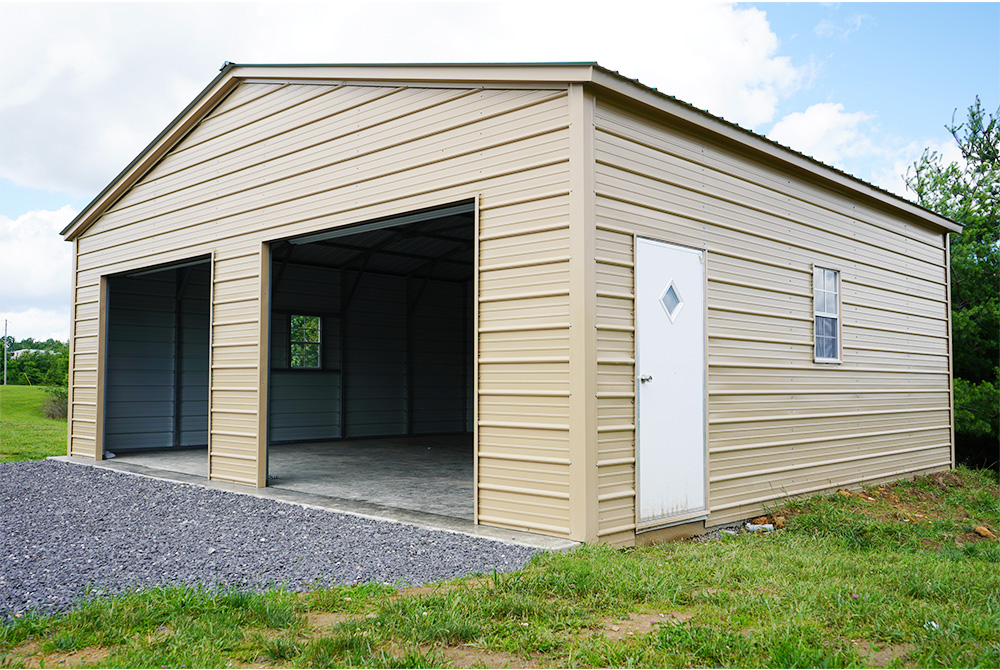
Earth Brown roof + Pebble Beige or Evergreen walls. Add a darker wainscot panel (Earth Brown again) on the lower 3–4 feet so mud splash disappears. This combo blends with fields and doesn’t look filthy after a single rainy day on a gravel drive.
Barndominiums / Residential-Style Shops
Matte black or textured charcoal roof + Sandstone / Clay / light gray walls. Reads “custom home / weekend place,” not “storage shed,” and it’s easier to resell.
Commercial / Fleet / Municipal Buildings
Pewter Gray or Quaker Gray walls + Black or very dark trim. That contrast looks intentional and hides day-to-day grime around doors, forklifts, and parking areas.
Coastal / Marina / Bayside Storage
Light gray or white walls + Slate Blue / Navy roof. The cooler palette looks “coastal” and it also runs cooler in direct sun. Use PVDF/Kynar finish and stainless or coated fasteners so salt doesn’t start rust rings around screw heads.
Note on HOA and light industrial parks:
Some zones don’t allow bright primaries (Cardinal Red roof, King Blue walls, etc.). If you’re building in a controlled subdivision or business park, get written color approval off real metal swatches before you order panels. Digital mockups will not save you in a dispute.
Climate and Site Realities
What’s the best metal building color for your region? Here’s how climate and location change the smart move:
Hot Climates
Go light on the roof with white, beige, or galvalume to keep things cooler. Use a mid-tone on the walls for balance. Matte and textured finishes also hide fading better than glossy finishes in strong sun.
Coastal Regions
Salt air eats paint if you’re not careful. Pick PVDF/Kynar coatings when possible, clean the panels every few months, and use stainless or coated fasteners so you’re not chasing rust at every screw head.
Farm & Gravel Roads
If your site’s dusty or gravel-based, two-tone is the move. A darker bottom section (wainscot) hides the dirt splash that shows up after every rain.
Snow Country
Darker roofs help melt snow faster. Choose mid-tone or textured walls to mask salt residue and grime from melting ice.
Real-world snapshots:
- 40×60 Farm Shop, Central Texas: We ran a galvalume roof + Pebble Beige walls + Earth Brown wainscot. Customer feedback after the first summer: the interior stayed noticeably cooler than their older dark-roof shed, even before insulation went in, and the lower brown panels still looked clean after multiple muddy rains.
- 30×40 Garage / Toy Storage, Upper Midwest: Dark Brown (almost bronze) roof + Quaker Gray walls. The darker roof helped shed snow and ice off the roofline in January, and the mid-gray wall color didn’t show the salty slush splash from plows and trucks.
- Coastal Equipment Shed, Gulf Coast: Light gray walls + Slate Blue PVDF roof and trim, all fasteners stainless or coated. We told the owner: quick hose rinse every couple months, especially after storm surge or heavy salt air days. It’s simple, but that rinse is what keeps salt from sitting on the panel and voiding long-term finish warranties.
Glare and neighbors:
In tight neighborhoods or high-glare areas (sun hitting traffic), some counties and HOAs don’t love bright reflective roofs facing roads. That’s where a light matte beige or sandstone roof is a smart compromise: still cooler, but not mirror-bright.
Wildfire / high-sun zones:
In certain high-sun, high-dry regions, people choose darker matte or textured finishes on walls because they cut glare (neighbors appreciate it) while still staying within non-combustible exteriors. If you’re in that situation, make sure you also talk to us about ember-resistant soffit/overhang details and door/trim choices, not just color.
Color Combination Trends in 2025
Color pairings are getting more intentional. The “spray it red and call it good” era is over. Here are the combos that keep showing up:
Modern Commercial Builds
Black roofs with sandstone or clay walls are a top choice for barndominiums, garages, and commercial projects. These colors are clean, sharp, and not too “farm.”
Farm and Ranch Buildings
Earth Brown roofs with beige or evergreen walls that blend right into open land.
Coastal Looks
White or light gray walls with navy or slate blue roofs. Those cool tones pop against sun and water, and they read “coastal,” not “storage rental.”
Workshop or Garage Styles
Pewter gray walls with black trim. Strong contrast, hides everyday wear, always looks like a plan.
Added notes on cost and longevity:
- Matte black / textured charcoal trims and roofs are trending hard because they look like high-end residential metal roofing, not “ag panel.” These finishes are often crinkle/textured SMP or upgraded SMP systems. They usually cost a bit more than plain glossy red or white, but they hide fingerprints, hide small panel waves, and age slower in terms of visible chalking.
- PVDF / Kynar dark blues, slates, and charcoals on coastal or commercial buildings cost more upfront than standard SMP, but they keep their color longer (less fade / chalk). That matters for resale, for branding (fleet buildings and storefronts), and for towns that want buildings to “match the parkway look.”
- Two-tone (lighter wall above / darker wainscot below) isn’t just cosmetic. It’s future-proofing. If a tractor bucket scrapes the lower panel or a truck bumper scuffs it, replacing a 3–4 ft wainscot strip later is easier and cheaper than replacing the full wall panel from eave to grade.
Warranties for Panels
Most metal building panels come with a paint warranty, usually around 10 years. That mainly covers the finish starting to chalk or peel on its own — it doesn’t cover things like dents, scratches, or somebody hitting the wall with a bucket on a skid steer.
Here’s what that really means in practice:
- Smooth SMP (Silicone-Modified Polyester) in the bright colors — the fire-engine reds, the bold blues — tends to fade and chalk faster in hard sun. Those shades usually have tighter warranty language. The lighter neutrals like beige or tan generally hold up longer and stay closer to their original color.
- Textured / Crinkle SMP panels are now showing stronger chalk/fade performance than old-school glossy SMP, and many suppliers back that with longer film integrity coverage. The texture also hides oil-canning, scratches, and handling marks.
- PVDF / Kynar finishes are the premium option. These are what we recommend in coastal / salt / high UV zones. They typically carry longer fade/chalk warranties (20–30 years range is common from coil coaters when installed correctly). They’re designed for color stability and corrosion resistance.
- Fasteners matter. If you use mismatched or cheap fasteners, rust can start at the screw head and creep. That’s not “paint failure,” so the panel warranty won’t bail you out. Ask for color-matched, approved fasteners for your finish type.
- Keep the paperwork. You should always keep the exact color name, batch/lot, and warranty sheet with your building documents. If you ever have to file a claim for chalking or peeling, the manufacturer will ask for that. A screenshot of a PDF color chart is not enough.
- Cleaning and maintenance: Rinsing the building with a wide, gentle spray is fine. What you don’t want is blasting it up close with high pressure, using harsh cleaners, or cutting panels with a hot abrasive blade that scorches the coating — that kind of stuff can void your coverage. So yes, you can wash it, just step back, use a fan tip, and go easy around screws and trim.
Metal Building Finishes
In addition to the color itself, the type of finish you choose matters. Here are the main finish systems you’ll keep hearing about:
Smooth SMP (Silicone-Modified Polyester)
Glossy, economical, but shows ripples on large panels. Classic “ag panel” look.
Textured / Crinkle SMP
Matte, hides surface flaws, kills glare. Becoming a favorite for both homes and small businesses.
PVDF / Kynar
Top-of-the-line coating for color stability and corrosion resistance. Great near the coast or for commercial builds that need a 20–30-year lifespan.
More detail so you can pick like a pro:
- Smooth SMP: This is the budget hero for inland farm/ranch buildings and utility structures. It can be more reflective, a bit glossier, and if you’re doing a long, wide wall (like 40’+ runs), you can see oil-canning and small ripples in certain light.
- Textured / Crinkle SMP: Same base chemistry family (SMP), but micro-textured. That texture cuts glare, hides handling dings, and makes the panel read more “architectural.” A lot of modern barndominiums, hobby garages, and even municipal fleet buildings are going crinkle for that reason.
- PVDF / Kynar: This is what we spec on salt-heavy sites, bayside storage, coastal shops, and high-visibility commercial buildings. PVDF holds color and gloss longer under brutal UV and salt exposure. It costs more, yes. But on the Gulf coast or anywhere with salt spray, it’s the difference between rinsing your building a couple times a year and still being proud of it 10+ years later… vs. watching chalk streaks and corrosion show up in year 3.
- Cool-roof / high-SRI lighter colors (often offered in PVDF or higher-end SMP systems) bounce heat off the roof skin instead of absorbing it. That matters if you’re trying to keep a shop workable without running AC nonstop. This is also where insulation, vapor barriers, and condensation control come into play. Those are covered in our insulation / heat control guide.
How to Choose the Best Color for Your Metal Building
There are a few key things you need to think through in order, not just “what looks nice.”
Think About Climate First
Match the roof color to your regional weather: dark for snow, light for heat.
Building Location
Look at what’s around you: trees, dirt roads, neighboring buildings, HOA rules.
Compare
Ask for an actual metal swatch before you buy. Digital samples always lie.
Building Orientation
South walls take the most sun and fade the fastest. That’s where glossy dark colors age the worst.
Think Ahead
If resale matters, stick with classic, neutral tones that don’t scare off the next owner.
Two more that save headaches:
Check Rules Before You Commit. If you’re building in a subdivision, HOA, industrial park, or anywhere with design guidelines, get written color approval off physical swatches (not a screenshot). Some places quietly ban bright reds/blues or high-gloss metal because of glare complaints. You don’t want to repaint a brand-new building because a board didn’t like Cardinal Red.
Avoid the Classic Mistakes
- Going full-gloss black or deep red on a huge south wall in high sun. It’ll run hot and show chalk/fade sooner.
- Skipping the wainscot on a gravel drive. The first rain will splash mud 24″ high and you’ll wish you had a darker lower panel.
- Approving only “what it looked like on my phone.” Screens lie. Always sign off on physical metal swatches in daylight.
- Forgetting how you’ll actually use the space. If you’re pulling tractors, skid steers, or work trucks in and out, expect bumps, salt, grime, and hydraulic fluid. Pick colors/finishes that hide that life, not colors that broadcast it.
- Not planning for insulation/comfort. A light, reflective roof now means less heat load later, which means your insulation and mini-split aren’t fighting a losing battle forever.
FAQs About Metal Building Colors in 2025
Can I mix matte and gloss finishes?
Yes, but keep gloss limited to trim or accents, because it draws the eye fast. You can absolutely run a matte/textured wall panel with a smoother/glossier trim or door frame and it’ll look intentional. What you don’t want is a super-gloss main wall in high sun, because every ripple, fingerprint, and oil-canning wave will pop.
Do darker colors fade faster?
A little, yes — darker colors take more UV abuse. But textured SMP and PVDF/Kynar slow that down a lot. Dark browns, charcoals, and matte blacks will last longer (and hide chalk) in those upgraded finishes than they would in basic glossy paint.
Is it okay to pressure wash painted panels?
Yes, on low pressure and a wide fan tip. Avoid harsh detergents. Stand back and don’t blast directly into fasteners, panel laps, or exposed cut edges. In coastal areas, rinsing is not “optional,” it’s maintenance — salt sitting on metal can void warranties.
What’s the best roof color to reduce heat?
Galvalume, white, or pebble beige. Light / reflective roofs bounce sunlight. In hot climates, that can make the inside of an uninsulated shop feel several degrees cooler even before you add insulation or HVAC. If you’re building conditioned space (barndominium, office-in-shop, etc.), starting with a reflective roof gives your insulation a head start instead of asking it to fight a 140°F metal surface.
Can I repaint later?
You can, but the process depends on the original coating. Repainting standard SMP is usually straightforward if you prep right. Recoating PVDF/Kynar is more specialized because that finish is designed to resist things sticking to it (which is why it lasts so long). Repainting also doesn’t reset the original factory fade/chalk warranty, so it’s smarter to pick the right finish up front.
American Metal Buildings is Your Partner for Durable Steel Structures
Whether you’re planning a backyard shop, a farm building, or a fleet garage, the right color makes it last longer and look better doing it. With American Metal Buildings by your side, you’ll always get the right color for the project at hand.
Our team helps you choose finishes that work for your climate, your property, and your long-term plans, with the same high-grade steel and coatings trusted nationwide.
Call our experts at +1 (877) 277-3060, and let’s build something that looks sharp for decades.
 Perplexity
 ChatGPT