

Why Budgets Blow Up
Most people go into a metal building project with a set number in their head. Then the bills start rolling in, and suddenly that number doesn’t stretch as far as it used to. It’s not that anyone made a huge mistake; it’s that a lot of little things never made it onto the first quote.
In this blog, we’ll explore some of the toughest and costliest aspects of developing your metal building budget, and how to avoid pitfalls along the way.
Quick Answer
Metal building budgets usually go over because the “kit price” excludes key costs like site prep and concrete, delivery/off-loading, engineering and permits, wind/snow upgrades, doors/openings framing, utility rough-ins, and cleanup/taxes/HOA rules. To prevent overruns, get an all-in estimate and confirm access, slab requirements, and permit rules before you order the building.
What Your Quote Should Include
- Site prep: grading, drainage, compaction, clearing
- Concrete: slab design, thickness/rebar needs, anchors, vapor barrier (as required)
- Delivery: mileage, rural/travel charges, and any special access fees
- Off-loading: who unloads, what equipment is needed (forklift/crane/manlift), staging space
- Permits: engineered/stamped drawings if required by your county (AHJ)
- Wind/snow code upgrades: doors, framing, anchors
- Openings: framed openings + trim/flashing
- Utilities: conduit/plumbing plan before the pour
- Cleanup: haul-off, final sealing/weatherstrips
- Local fees: permit costs, HOA requirements, property tax impacts
Hidden Cost of a Metal Building
| Cost area | What triggers extra cost | How to avoid it |
|---|---|---|
| Site prep + slab | Soft spots, drainage fixes, extra fill/haul-off | Get a pad quote early + confirm drainage plan |
| Delivery/off-load | Tight driveways, limited staging, no equipment on site | Send driveway photos/video; plan unload equipment |
| Engineering/permits | Wind/snow rules, stamped plans, redesign | Call permit office (AHJ) before ordering |
| Doors/openings | Changing door sizes/locations late | Finalize openings early; don’t “decide later” |
| Utilities | Cutting into a finished slab | Plan conduit/plumbing before the pour |
Where Budgets Blow Up
When metal building budgets start running off track, it usually comes down to a few repeat offenders — the parts that sound simple until you’re standing on the property with machines running and trucks waiting.
Most overruns come from:
- Site-prep surprises
The land looks flat until you start digging. Then comes grading, fill dirt, drainage fixes, and there goes a chunk of your budget. (If water has nowhere to go, it always finds a way under your slab.) - Delivery and installation fees
The kit price isn’t the whole story. If the crew has to haul it down backroads, make extra trips, or bring equipment to unload and stage steel, expect extra charges. - Engineering upgrades for wind and snow
Counties (and inspectors) don’t play around with safety codes. You might need stronger framing, thicker panels, upgraded doors, or stamped plans to get a permit approved. - Add-ons
Colors, panel upgrades, bigger openings, and heavier framing add up fast once you start customizing.
Contractor tip: Before signing anything, ask for an all-in estimate that includes site prep, delivery/off-load, and permits. Comparing “kit prices” doesn’t protect your budget.
Site Prep and Pad Work
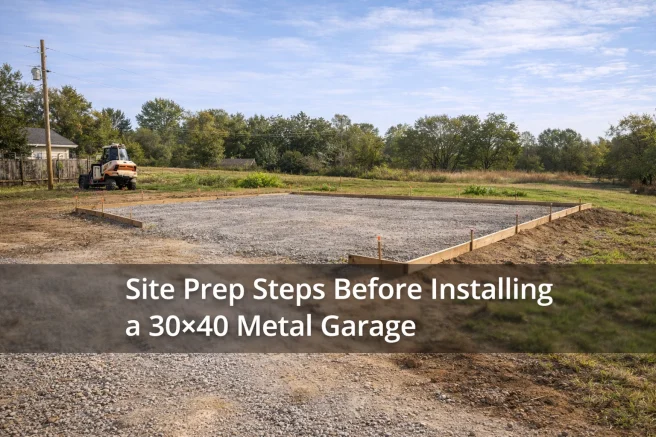
Site prep is where a lot of budgets go sideways. Preparing the ground and pouring a proper foundation usually costs more than folks expect — and you can’t “figure it out later” once the building is scheduled.
Budget hangups here typically include:
- Grading
Even a “level” site might need work. A few inches off can mean more machine time, more material, and more hauling than you planned. Also, if you have to correct drainage after the fact, it’s rarely cheap. - Tree and vegetation removal
Clearing trees, stumps, or brush isn’t just cutting. It’s hauling, chipping, and sometimes paying disposal fees. - Compaction
Without a compacted base, your slab can crack later. Most people don’t think about it until the damage shows up or doors start sticking. - Concrete slab installation
The slab is often the single biggest line item. Thickness, rebar/schedule, and the slab design depend on soil conditions, building size, and intended use (storage is different than a shop with heavy equipment).
Contractor tip: Bring in a local site contractor who’s poured pads for metal buildings. They’ll know what’s truly needed for your area and soil — not just what looks good on paper.
Delivery, Access, and Off-Loading
Getting the building to your property sounds simple until the truck shows up and there’s nowhere to turn, stage, or unload. That’s where hidden costs tend to appear.
You’ll commonly see costs from:
- Limited access
If your site’s hard to reach, delivery trucks may need smaller loads, extra trips, or special equipment to unload and stage the materials. - Rural surcharges
Some places cost more to reach. Fuel, travel time, and sometimes overnight stays all factor in.
Delivery-day tip: Send your dealer/crew pictures or video of the driveway, gate, and build area before delivery day. It helps avoid the “we can’t unload here” fees and last-minute scrambling.
Engineering and Permits
Building rules aren’t the same everywhere. Your local permit office (often called the AHJ — Authority Having Jurisdiction) will care about wind speeds, snow loads, exposure, and soil/foundation requirements. That can change the design and cost.
Hidden costs here often include:
- Engineered or stamped plans
Many areas require them for a permit. They confirm your building meets code and can come with an additional engineering fee. - Wind-rated doors and framing
In coastal or high-wind zones, you’ll need upgraded steel and hardware. That can noticeably affect your overall budget, especially with larger openings. - Reinforced pads and anchors
Heavier designs demand stronger foundations. More steel and thicker concrete equal more expense.
Permit tip: Before you buy, call the permit office and ask what they typically require for a metal building in your zone. Knowing this early keeps you from redesigning halfway through.
Anchors and Foundations
Anchors don’t get much attention, but they matter — they’re part of what keeps the building tight, square, and stable over time.
The foundation type you choose changes the whole project. Concrete foundations cost more upfront, but they’re built to last. Cheaper base options can work in some cases, but they’re also where we see more long-term headaches.
Contractor tip: If your budget allows, concrete is usually the “do it once, do it right” choice — especially if you want a long-term shop, storage, or workspace.
Doors, Windows, and Framed Openings
This is where people get surprised: “just add a door” is rarely just a door. Any opening in steel needs proper framing to keep the structure strong and the panels sealed.
Hidden costs for access include:
- Framed openings
Every door and window needs extra framing. Larger openings need more steel, more labor, and more time — and moving them late can trigger rework. - Weather trim and flashing
Not flashy, but necessary. Keeps out rain, wind, and corrosion. Often priced separately.
Build-planning tip: Finalize door and window placements early. Changing your mind mid-build often costs twice — once in materials, once in labor.
Material Upgrades
A few small upgrades here and there, and suddenly you’re hundreds (or thousands) over. The costs stack faster than most people expect.
Here’s where it can get expensive:
- 26-gauge panel upgrades
Thicker steel can look and perform better, but it costs more. - Colored screws
A small aesthetic upgrade — but it isn’t free. Every box adds up. - Reinforced trusses
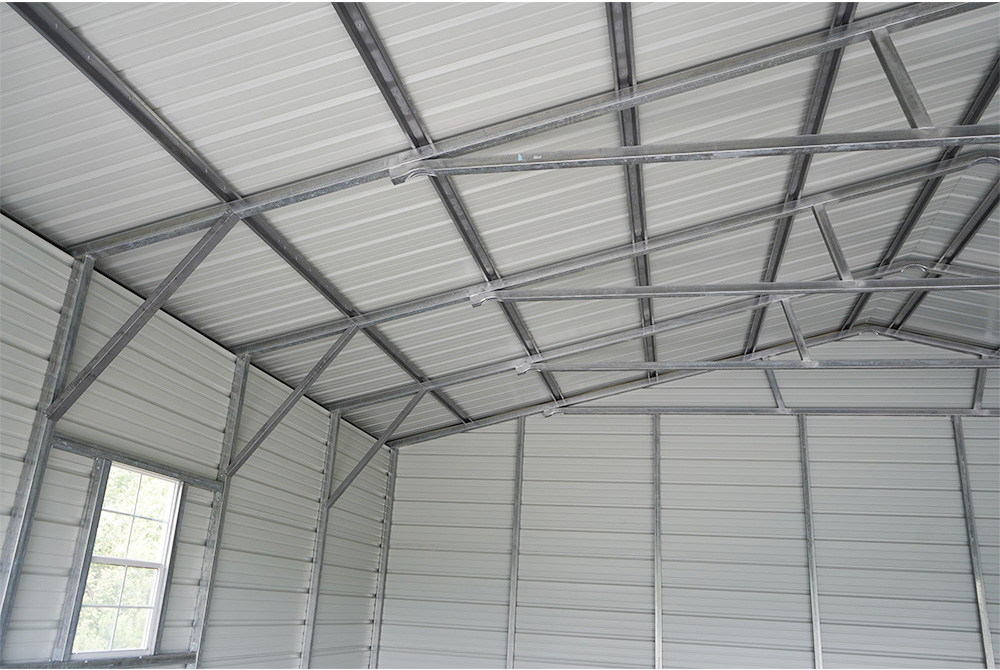
In regions with heavy snow and high winds, reinforced trusses, heavier legs, and thicker gauge framing may be required. More steel usually means a higher final price.
Contractor tip: Put your money into structure first. You can always make it prettier later.
Utility Expenses
Plumbing and electrical are often an afterthought until someone realizes they’re cutting into a finished slab — or running conduit in a way they don’t really want.
Your biggest cost factors for utilities include:
- Skipping early planning
If you don’t lay conduit or plumbing lines before the pour, you can end up paying to redo work later. - Lighting and wiring
Installing during construction is usually quicker, cleaner, and cheaper than retrofitting after the building is closed in.
Trade tip: Bring your electrician or plumber in early — even a short consult before the pour can save major headaches later.
Cleanup Costs
Once the crew’s gone, cleanup at your building site may still be necessary — and it can add to your total cost.
Some of the biggest expenses here are:
- Debris haul-off
Steel scraps, pallets, and packing materials pile up fast. Local dump fees can surprise you. - Sealant and weatherstrips
Those last steps that make everything watertight often fall under “miscellaneous,” but the costs add up.
Closeout tip: Ask if cleanup and sealing are included before the build starts. It’s cheaper to bundle than hire out afterward.
Local Taxes and HOA Approvals
You might not think of taxes or the HOA until after the building’s up — but they will.
The biggest cost factors in this category are:
- Permitting
While generally not drastic, different counties charge different fees for building permits. Contact them early to find out what it will cost to make your project legal. - County taxes
A new structure can bump your property assessment and your yearly bill. - HOA approvals
Some homeowner associations charge application fees or require specific colors, materials, or roof pitches.
Paperwork tip: Make a quick call to both before buying. It saves you the “repaint it,” “redo it,” or worst-case “remove it” nightmare later.
American Metal Buildings Can Help You Budget the Full Picture
At American Metal Buildings, we’ve walked through these same conversations with thousands of buyers. We know where projects go off-track, and how to keep them steady. Whether it’s site prep, engineering, or just making sure you’re not blindsided later, we help you plan it the right way from day one.
Call us today at [Phone number] to start working on your project. Let’s talk through the full picture for a quote that doesn’t leave anything hiding between the lines.
 Perplexity
 ChatGPT