

Buying a metal building can get overwhelming. Garages, barns, carports, RV covers, commercial shops — from the outside they can look similar, but they’re not built for the same purpose.
The right structure depends on three things:
- What you’re storing
- Where the building will install
- What your local building authority will approve
Below, we’ll walk through the main building types we design and install, what each one is actually built to do, and the problems that usually show up when people pick the wrong style or go too small.
Why Getting the Right Building Up Front Matters
Once the frame is set and anchored, you’re committed. You want it right the first time — correct size, correct layout, correct certification for your area.
Here’s what “right” means in practice:
1. It fits daily use.
If you can’t fully open the truck door, or you’re constantly moving one machine just to reach another, the building is undersized. Most people regret going too small. Almost nobody regrets having extra space.
2. It protects what you’re paying for.
Sun, hail, theft, salt air, and roof condensation will destroy paint, seats, wiring, feed, and tools. The structure should solve those problems, not just “cover it a little.”
3. It meets local requirements.
Counties care about design wind speed, roof snow load, anchoring, and slab details. We design around those requirements so permitting and inspection go smoother.
4. It adds real property value.
A certified, properly installed steel structure on a slab is usable square footage — garage, workshop, storage, RV bay, small business space — not “just a shed.” That matters at resale.
Main Steel Building Types and What They’re Really For
Metal Garage
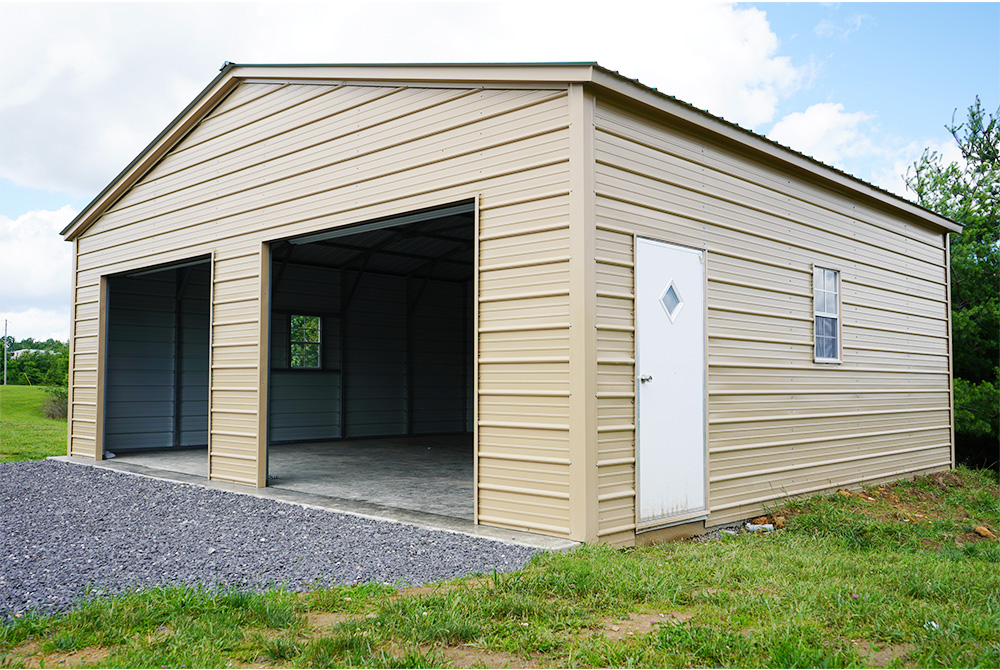
A metal garage is a fully enclosed steel building. It locks, it can be insulated, and you can run power and lighting. Functionally, it becomes part of the property, not a temporary shelter.
Typical uses:
- Parking and protecting daily vehicles or collector vehicles
- Storing tools, equipment, seasonal gear
- Small workshop space (woodworking, light welding, weekend projects)
Sizing guidance from real installs:
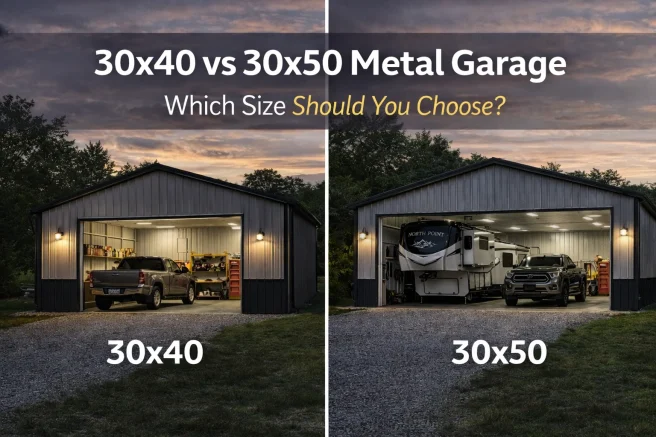
If you’ve got a full-size pickup and even a modest workbench, a 20′ x 20′ feels cramped fast. Most homeowners are happier starting around 24′ x 30′ or 30′ x 40′ so they can open doors, move around, and still have wall space for storage.
Design details that matter:
- Door height and door count, measured with ladder racks / roof cargo in mind
- Side walk-in door placement so you’re not rolling a 10′ or 12′ bay door just to grab one tool
- Insulation in the roof and walls to control temperature swings and prevent condensation dripping onto concrete, tools, and wiring
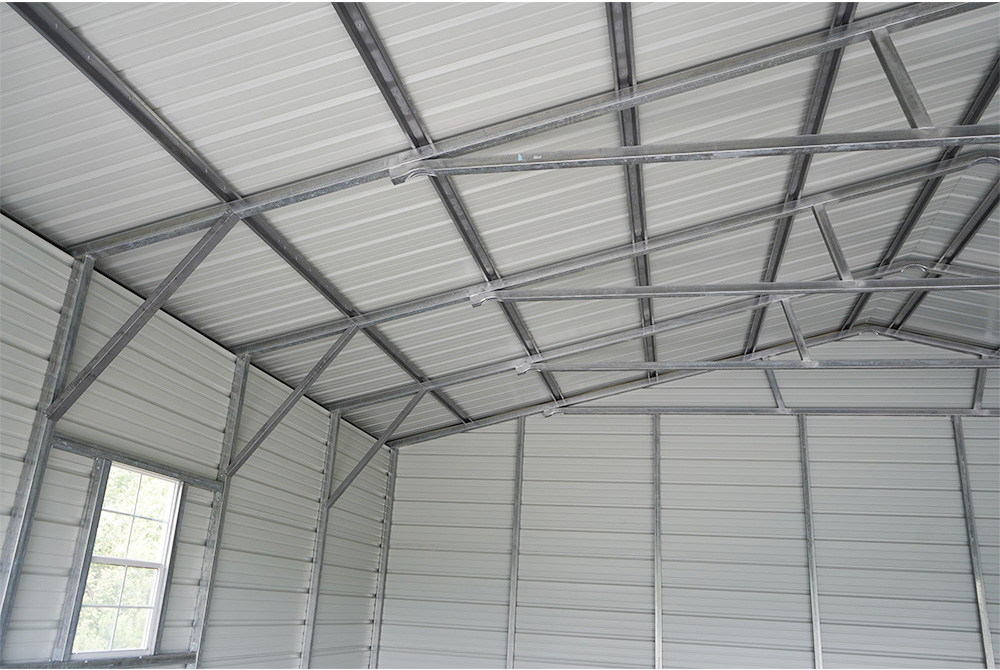
Typical construction is 14-gauge or 12-gauge steel framing with 26-gauge exterior panels. That delivers strength, long service life, and no issues with wood rot or termites.
Metal Barn
A metal barn is built for tractors, feed, hay, equipment, and livestock. You get wide, open bays and enough clearance to move machinery in and out without fighting center posts.
Why people choose steel barns instead of wood:
- Steel does not rot in humid climates
- Termites and boring insects aren’t a factor
- You can add lean-tos or extend bays later without tearing the whole structure apart
Ventilation is critical:
If you’re housing animals or storing hay in a high-humidity area, airflow is not optional. Stagnant air creates moisture and odor problems quickly. We plan for open bays, ridge ventilation, and shade on the correct side of the structure — not just “how big do you want it.”
If you’re thinking “I just need a place for the tractor, round bales, and side-by-sides,” a barn layout is usually the right answer, not a standard garage.
Metal Carport
A metal carport is a roof on steel posts. No full walls by default. It’s fast to install and more cost-effective than a fully enclosed building.
Common uses:
- Everyday parking for trucks, SUVs, and boats
- Hail and sun protection in high-UV or storm-prone areas
- A covered work zone where you can load, wash, or wrench without direct sun or constant rain
Framing and anchoring are not “all the same”:
In higher-wind or hail-prone regions, we typically recommend heavier framing (12-gauge instead of lighter tubing), proper anchors, and sometimes partial side panels to block driving rain. We’ve seen lightweight, non-certified carports bend or fail in crosswinds because they weren’t anchored or braced to local specs. That’s why we match framing, hardware, and anchoring to your area’s design wind requirements.
Commercial Metal Building
A commercial metal building is a clear-span steel structure — open floor, no interior support posts — with the ceiling height and door openings to support real work. We design these for:
- Auto repair bays and detail shops
- Contractor shops and yard operations
- Retail or service businesses with storage in the back
- Fabrication and light industrial use
Most business buyers want to start open and then frame office space, a parts room, a counter area, or a showroom inside the shell later. Steel is ideal for that. We plan bay doors, walk-in entries, ceiling height, and clearances around lifts, pallet racking, forklift traffic, and customer access.
Commercial projects are where local code matters most. Expect questions from the county on design wind speed, roof snow load (PSF), anchoring, ADA access, and sometimes fire separation. We build to those specs before installation is scheduled.
RV Cover / RV Shelter
An RV carports or RV shelter is built specifically for motorhomes, fifth wheels, toy haulers, and large boats on trailers. The goal is simple: protect the roof, seals, paint, and glass so you’re not paying for preventable repairs every season.
Two rules we follow:
- Height: The shelter needs clearance above the tallest point of the RV, not just “same height as the RV.” You want to be able to get on the roof, service A/C units, and check seals without catching framing.
- Width: Plan for slide-outs and doors. You should be able to open the slides under cover and still walk around the unit.
A common path is starting with an open RV cover (roof and posts), then closing in sides or adding a back wall later. That gives you extra protection from sun, rain, and debris without committing to a fully enclosed garage on day one.
Which Structure Fits Your Situation?
Use this quick reference if you’re not sure which direction to go:
| You need to solve this… | Best Fit | Why It Works |
|---|---|---|
| Park a truck, protect tools, run a small workshop | Metal Garage | Enclosed, lockable, easy to insulate and wire for lights and outlets. |
| Keep tractors, hay, feed, or livestock under cover | Metal Barn | Wide bays, airflow, easy to add lean-tos or expand as the operation grows. |
| Protect vehicles, boats, or ATVs from sun, hail, and debris | Metal Carport | Fast install, lower cost, roof coverage without paying for full walls. |
| Run a business, work on equipment, handle customer traffic | Commercial Metal Building | Clear-span floor, tall bay doors, easy to frame offices, showroom, or storage inside the shell. |
| Store and protect an RV, fifth wheel, or toy hauler long-term | RV Cover / RV Shelter | Extra height and width for slide-outs and roof access; keeps seals and finishes out of UV |
If you’re still unsure after looking at this, call us. Tell us (1) what you’re storing, (2) where it’s going, and (3) whether you need power/insulation. We’ll tell you which building style actually makes sense for that setup.
What You Need to Plan Before You Buy
This is the part most people underestimate. The building is only half the story. The site, doors, and local rules matter just as much.
Location and Code
Different regions have different structural requirements.
- Roof snow load is specified in pounds per square foot (PSF) and must meet the minimum requirement set by the local building authority.
- In coastal and hurricane-prone regions, the building must be engineered for higher design wind speeds, secured with corrosion-resistant hardware, and properly anchored; inspectors pay close attention to those details during approval.
- Hot, humid areas deal with condensation and corrosion first. That directly affects panel choice, fasteners, and ventilation.
We build to your ZIP code so you can permit and pass inspection instead of guessing.
Size and Door Layout
Many buyers only think about the footprint and forget about clearances and door placement.
- Tallest thing going inside (lifted truck, tractor with ROPS, Class A RV, etc.)
- Whether you want straight pull-through or you’re backing in
- Where you want the walk-in door, so you’re not rolling a 10′ or 12′ bay door just to grab one box
If you tell us you’ve got a lifted F-250, two four-wheelers, and a workbench, we’re not going to pretend a 20′ x 20′ is enough. It usually isn’t.
Foundation and Anchoring
Inspectors and lenders both pay attention here.
- Anchored to a poured concrete slab (typical for garages, shops, and commercial buildings)
- Anchored to ground or piers (typical for barns and carports in some regions)
In higher-wind counties, anchoring and hardware are not optional. The structure needs to be secured to meet design wind speed requirements, and that’s checked during approval.
Insulation and Condensation Control
Bare metal sweats. Warm interior air hits a cool metal roof panel, moisture forms, and it drips. That drip will rust tools, stain concrete, soak animal bedding, and damage stored inventory.
Common solutions:
- Vinyl-faced fiberglass insulation
- Spray foam
- Vapor / radiant barrier under roof panels
If you’re going to use the building as a workshop, retail floor, animal shelter in winter, or any type of conditioned space, insulation isn’t cosmetic — it’s how you control both temperature and condensation.
Room to Grow
Steel is modular. You can extend a bay, add lean-tos for extra covered parking, or close in a carport and turn it into an enclosed garage later.
If expansion is likely, tell us. We can frame connection points now so adding on later is straightforward instead of starting from zero.
Regional Requirements Are Not Optional
The same “30 x 40 garage” is not built the same way in Colorado, Alabama, and Michigan. Location drives engineering.
- Snow regions (mountain states, upper Midwest): Higher roof snow load ratings in PSF, additional bracing, and steeper roof pitch so snow sheds instead of sitting on the structure.
- Coastal and hurricane-prone regions: The structure must be engineered for higher design wind speeds, anchored correctly, and secured with corrosion-resistant hardware. Inspectors pay close attention to those details during approval.
- Hot, humid climates: Condensation and corrosion control become the priority. Insulation, ventilation, and hardware selection matter just as much as square footage.
We factor all of this in before installation is scheduled. You should not have to order a building and then find out after the fact that the county won’t sign off on it.
How Long Do Steel Buildings Last?
When they’re anchored correctly, built with the correct gauge framing and panels, and maintained, quality steel buildings routinely last decades. Seeing 40–50+ years of service life is not unusual.
Why property owners keep choosing steel over wood:
- No rot in damp climates
- No termite damage
- Less repainting and structural repair over time
- Easier to insure and resell if the structure is certified and permitted
It’s a lower-maintenance, longer-term solution for most areas of the country.
FAQs
How long does install take?
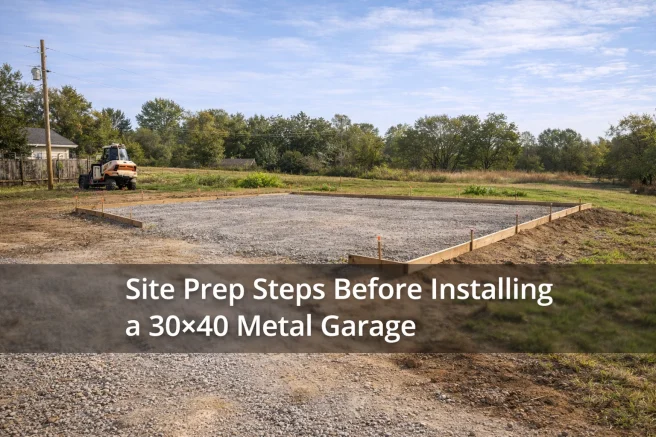
Once the site is prepped (graded and, if required, slab poured), most standard buildings go up in a matter of days. Severe weather — especially wind — can delay crew work.
Can I pick roof style and colors?
Yes. Roof style, wall color, and trim color are all selectable. Many homeowners match the garage or shop to the house or main building so it looks integrated, not temporary.
Do I need insulation?
If you’ll be inside working, storing sensitive equipment, or housing animals in winter, yes. Insulation keeps interior temperatures more stable and prevents condensation forming on the underside of roof panels.
Do I need a permit?
Most counties require a permit for enclosed garages, workshops, and any commercial-use building. We provide engineered drawings showing design wind speed, roof snow load (PSF), and anchoring so you can submit for approval.
What size garage actually works?
For one full-size pickup plus work space, 24′ x 30′ is a common starting point. For two vehicles or a truck plus equipment (side-by-side, mower, etc.), 30′ x 40‘ gives you usable room. Going “bare minimum” is the most common regret.
Can I add onto it later?
In most cases, yes. We can extend frames or add lean-tos, or enclose an open cover later. If you think you’ll need more space in the future, tell us up front and we’ll design with expansion in mind.
Get a Building Designed, Certified, and Priced for Your Location
American Metal Buildings designs, engineers, and delivers custom steel structures nationwide — garages, barns, carports, RV covers, and commercial metal buildings. Every project is sized to what you’re storing and certified for your location’s wind and snow requirements before we schedule installation.
We don’t sell one-size-fits-all kits. You choose the layout, door heights, roof style, colors, and options you need. We match that to code requirements in your area and anchor it correctly. You get a building that’s built to pass, built to last, and built for real use — not just a brochure photo.
We offer one of the widest ranges of custom metal buildings for sale across the country — from single-bay garages to agricultural barns to commercial shop buildings — at highly competitive pricing.
We design and deliver steel buildings every week for homeowners, farms, RV owners, and small businesses across multiple regions. The first question we ask is not “what color do you want?” — it’s “what are you putting in it, and where is it going?” That’s how we quote the correct structure the first time, and that’s why it clears inspection.
Ready to get the right building?
Call experts at American Metal Buildings to order now. Tell us what you need to protect and where it’s going. We’ll spec the correct building — garage, barn, carport, RV shelter, or commercial space — and price it for your location.
 Perplexity
 ChatGPT