

If you’re shopping for a metal building, you’ll run into “Risk Category” sooner than you expect—usually right when the building department asks for it on the permit application or the engineer lists it on the design criteria sheet.
Here’s the part people miss: Risk Category isn’t a marketing label. It’s a building-code classification that helps set the design criteria for the structure. And if your plans say one thing but the drawings look like something else, that’s when you get a plan-review correction and the project slows down.
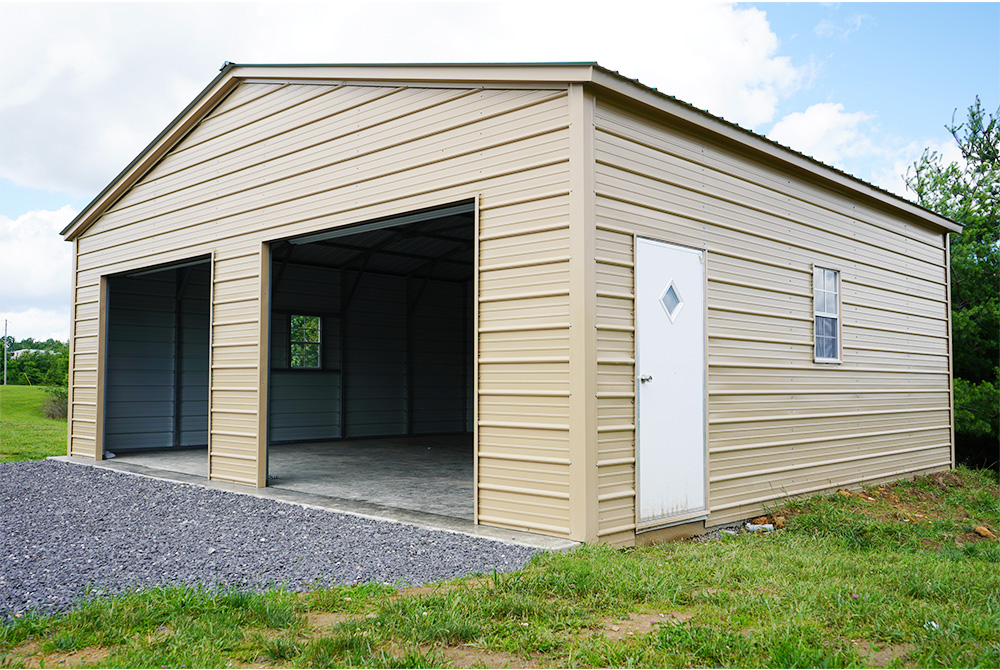
A building’s Risk Category is the code’s way of classifying structures based on how serious the consequences would be if the building failed. Risk Category I may apply to truly limited-occupancy, low-hazard uses (often agricultural storage). Risk Category II is the most common category for regular-use buildings—many garages, workshops, and permanent metal buildings. The category influences structural design criteria for loads like wind and snow.
What “Risk Category” Means
Risk Category is how building codes group buildings by risk to human life and impact if something goes wrong. The more a building is used by people—and the more normal it is as an occupied structure—the more conservative the required design approach tends to be.
In practical terms, Risk Category affects:
- What the engineer assumes for design criteria,
- What the building department expects on your permit set,
- And how smoothly you get through plan review.
You’ll usually see the Risk Category noted on the plans under a “Design Criteria” box along with things like wind, snow, exposure, and other site assumptions.
Risk Category I (When It Really Applies)
Risk Category I is typically associated with low-hazard, limited-occupancy structures—buildings where people are not normally inside and where failure is less likely to cause loss of life.
Projects that may qualify (depending on your local jurisdiction):
- True agricultural storage (hay, equipment storage, farm-only use)
- Simple equipment shelters where people only enter briefly
- Certain seasonal or limited-use storage structures
Contractor reality: If you’re planning to spend real time in the building—working on vehicles, running tools, hanging out in the shop—many reviewers will treat it like a normal-use building even if you call it “storage.” It’s not about what you hope it is. It’s about how it functions.
Risk Category II (Where Most Projects End Up)
Risk Category II is the “standard” bucket for most buildings that aren’t clearly Category I, III, or IV.
Common Risk Category II uses:
- Detached garages
- Workshops and hobby shops
- Storage buildings you access regularly
- Small commercial / contractor storage
- Light business spaces
Important nuance: Different AHJs interpret and enforce classification a little differently. But in many areas, if it’s permanent and used routinely, Category II is the path of least resistance.
Risk Categories III and IV
Most buyers won’t land here, but it’s worth knowing they exist.
- Risk Category III often involves buildings with large occupant loads or where failure has bigger community consequences.
- Risk Category IV generally covers essential facilities expected to function during emergencies.
If you’re building something unusual (assembly space, public-use facility, critical operations), this is where you stop guessing and confirm it early with your design team and AHJ.
Why “It’s Just Storage” Still Gets Treated Like Category II
A lot of people genuinely think they’re Category I—until plan review.
If any of these are true, you’ll often be treated as Risk Category II
- It’s a garage (cars in/out = regular use)
- It’s a workshop or you’ll spend time inside
- It’s a permanent building on a residential/commercial parcel
- You’re adding electric, plumbing, HVAC, insulation, or interior finishes
- You’re including bathroom space, an office corner, or a mezzanine/loft
- Local policy is to default most permanent accessory buildings to Category II
A real-world example
We’ll see a permit application that says “storage,” but the drawings show a slab, a big overhead door, man door, and power planned for tools and lighting. To a plans examiner, that reads like a garage/workshop. In many jurisdictions, that’s enough to trigger Category II expectations.
A common plan-review correction
You’ll often get a comment like:
“Proposed use/occupancy does not match submitted drawings. Revise design criteria/classification and provide updated structural calculations.”
That’s not the reviewer being difficult. That’s the office protecting itself and enforcing consistency.
Risk Category I vs II: What’s Different
| Feature | Risk Category I | Risk Category II |
|---|---|---|
| Expected occupancy | Rare / limited | Regular human use |
| Typical uses | True agricultural storage, limited-use shelters | Garages, shops, workshops, most permanent buildings |
| Design criteria | Often less conservative (if accepted) | Standard criteria used for most buildings |
| Plan review posture | Often scrutinized; may require proof | Common and widely accepted |
| Cost trend | Sometimes lower upfront | Often a bit higher upfront, fewer surprises |
Two buildings can look almost identical from the road and still be engineered differently depending on classification and site design criteria.
How Risk Category Affects Your Metal Building Cost (What Actually Changes)
When a project gets bumped from Category I to II, the price change usually isn’t magic—it’s a handful of predictable upgrades.
1) Primary framing and secondary members
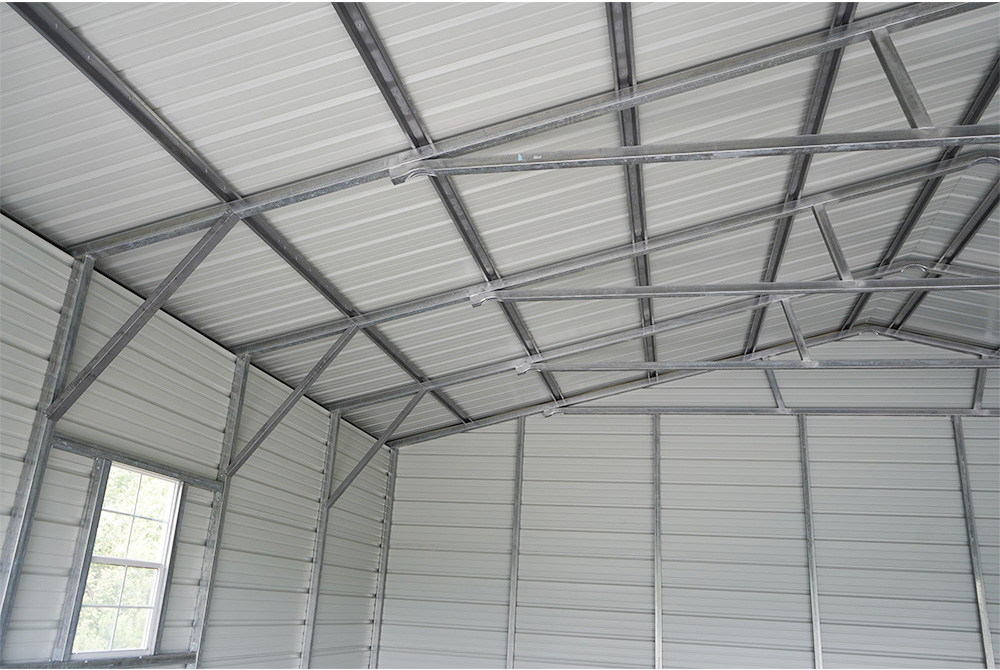
More conservative criteria can mean heavier main frames (columns/rafters) and sometimes upgrades to purlins, girts, or bracing—especially in higher wind or snow regions.
2) Connections and bracing around big openings
Large overhead doors and wide end wall openings can demand stronger bracing and framing details. If the engineer has to stiffen the system to meet the criteria, that can add steel where you don’t “see it” from the outside.
3) Foundation and anchorage (where surprises hit)
This is where homeowners feel it most. Once reactions (uplift, shear, and overturning) increase, the foundation design often needs upgrades like:
- Larger footings or thickened edges,
- More uplift resistance,
- Stronger anchorage details,
- And more attention to slab edges and openings.
4) Engineering time and revisions
If you order a building engineered one way and then the AHJ requires different criteria, you can end up paying for revisions and burning time on resubmittals.
Permitting and Inspection Realities (What Reviewers Typically Care About)
Most plan reviewers are looking for alignment:
- Does the stated use match the drawings?
- Are the design criteria clear?
- Do the structural calcs match the plan set?
- Is the foundation/anchorage properly addressed for the site?
What you’ll often be asked to provide
- Engineer-stamped building plans (where required)
- Structural calculations (where required)
- Site plan (location, setbacks, orientation)
- Foundation plan or foundation design criteria
- Anchor bolt plan and reactions
- Door/opening framing details (especially for large doors)
Regional/site factors that can change everything
Even with the same building size, site conditions can drive the design:
- Wind environment/exposure,
- Snow and drifting conditions,
- Soil and frost depth,
- And in some areas, seismic/flood considerations.
This is why two “identical” buildings can price differently in different towns.
Before You Order: A 5-Point Buyer Checklist (Saves the Most Time)
Before you sign anything, do this:
- Confirm the intended use you’ll actually build and use (garage vs storage vs shop).
- Ask the AHJ what they expect for Risk Category on that use.
- Confirm what documents are required (stamped plans, calcs, foundation, site plan).
- Verify your site design criteria (wind/snow and any local amendments).
- Make sure your supplier and engineer are designing for the same target the AHJ will approve.
This prevents the “cheap quote → permit rejection → expensive fix” cycle.
What to Write on the Permit Application (So It Matches Your Drawings)
This is where people accidentally create problems.
If it’s a shop, call it a shop. If it’s a garage, call it a garage. If it’s agricultural storage, make sure your drawings, zoning, and site context support that.
Good approach: be accurate and consistent across:
- Application description,
- Plan title block,
- Floor plan notes,
- And any electrical/plumbing scope.
When those don’t match, that’s when reviewers start digging in.
Common Mistakes (and How to Avoid Them)
Mistake 1: Assuming Category I automatically saves money
Sometimes it looks cheaper up front, but if the AHJ reclassifies it mid-review, the revision costs can wipe out the “savings.”
Fix: Start with the classification your permit office is likely to accept.
Mistake 2: Ordering before checking with the AHJ
Every jurisdiction has its own patterns and hot buttons.
Fix: Call or email the building department early with a short question list (see below).
Mistake 3: Labeling the use incorrectly to dodge Category II
This is the fastest way to trigger corrections.
Fix: Describe the building honestly and design it accordingly.
Mistake 4: “No one will notice later”
It often comes up during insurance, resale, refinance, or later permits.
Fix: Keep paperwork aligned with real use.
Mistake 5: Not sharing the full plan (future buildout)
A “storage building” that becomes a finished shop with HVAC and a bathroom is a different animal.
Fix: Tell your supplier/engineer the end goal now—not after the shell is ordered.
Two Buyer Questions That Come Up All the Time
Can I build it as Category I and “convert it later”?
You can modify buildings later, but it’s often the most expensive route. Once you add regular-use features (finished interior, utilities, shop use), you may trigger re-review, upgrades, and documentation gaps. If you already know it’s going to be a shop, it’s usually smarter to design that way up front.
Does adding insulation or drywall change the risk category?
Insulation and finishes don’t automatically change classification by themselves, but they often signal intended regular use—especially when combined with electrical/HVAC. In many offices, that combination pushes the project toward Category II treatment.
Questions to Ask Your Building Department
- For a detached garage or workshop, do you typically treat it as Risk Category II?
- Do you allow Risk Category I for agricultural storage—and what proof is needed?
- Which IBC edition (and local amendments) are you enforcing?
- Do you require engineer-stamped plans and structural calculations for metal buildings?
- Are there specific local wind/snow/exposure assumptions I must use?
- Do you require a foundation plan with reactions/anchor schedule at submittal?
Six questions like this can save weeks.
Choosing the Right Risk Category for Your Metal Building
For most permanent metal building projects you’ll use regularly, Risk Category II is typically the smoother, safer path: fewer plan-review surprises, cleaner paperwork, and fewer headaches later with insurance or resale.
Risk Category I can be appropriate for true limited-occupancy agricultural storage—but using it as a “discount strategy” often backfires once the plans are reviewed.
If you’d like help designing a permit-ready building for your site and use, contact American Metal Buildings at [phone number]. We’ll walk through your intended use, confirm what your local office usually expects, and help you avoid redesigns and delays.
FAQs About Metal Building Risk Categories
1) What risk category is a detached garage or workshop?
In many jurisdictions, garages and workshops are treated as Risk Category II because they’re regular-use buildings. Always confirm with your AHJ.
2) Do some building departments allow Risk Category I for agricultural storage?
Yes—some do. Many require zoning documentation or proof that the structure is strictly agricultural and limited-occupancy.
3) Which code edition applies?
Your AHJ determines this. Ask which IBC year and amendments they enforce so your engineer designs to the correct basis.
4) Do I need engineer-stamped plans and calculations?
Often yes for permanent metal buildings, but it depends on the jurisdiction and scope. Your building department can tell you what’s required for approval.
5) Do local wind/snow/exposure requirements matter?
Yes. Local design criteria and site exposure can change the engineering and foundation needs significantly—even for buildings that look identical on paper.
 Perplexity
 ChatGPT