

With the recent wave of severe storms across the U.S., a lot of property owners are taking a fresh look at what they’re asking their buildings to survive. That late-January 2026 system — the one that turned highways into ice rinks, knocked out power in pockets, and piled wet snow and sleet on roofs — is a perfect example. It wasn’t “just winter.” It was weight, wind, and cold that stuck around long enough to expose weak spots.
If you’ve got equipment, inventory, animals, tenants, or your own family under that roof, you start thinking differently. You start asking, “If this happens again, does my building ride it out… or does it become the problem?” And when people look at steel buildings, the question comes fast: Is a metal building actually safe in storms like we’re seeing in 2026?
Metal buildings can be very safe in 2026 storm conditions — but only when they’re engineered and installed for your local risks. Steel isn’t the magic. The magic is the design wind speed, snow/ice load, exposure, bracing, roof system, and anchoring to a real foundation. A light-duty “kit” with weak roof framing or shortcut anchors can fail even if it’s made of steel.
What “Storm Safe” Means for a Metal Building
People hear “storm safe” and picture one thing: the frame still standing when it’s over. But storms don’t test one part. They test the whole chain.
Wind load vs. “that one huge gust”
Wind isn’t just pushing on walls. It’s also trying to lift the roof — especially at corners and edges. Those areas see the nastiest suction. If the roof-to-frame connection is light, or the edge detailing is sloppy, wind starts peeling things back.
Snow and ice aren’t drama — they’re dead weight
Winter storms like we just saw in January 2026 don’t need 100 mph winds to cause real damage. Wet snow and ice load a roof like a slow press. Purlins, rafters, bracing, and connections all start carrying more than they were meant to.
And drifting makes it worse. Wind can pile snow in one section so heavy that the rest of the roof looks fine… right up until it isn’t.
Prolonged cold creates “expensive side damage”
Cold snaps don’t always collapse buildings. Sometimes they just destroy operations:
- Doors and tracks freezing up
- Condensation dripping off steel onto equipment
- Insulation getting wet and never drying right
- Pipes freezing and bursting
A building can “survive” and still cost you a pile of money.
Why Metal Buildings Often Do Well in Severe Weather
When a metal building is done right, it’s a tough system.
Strong frame + predictable behavior
Steel frames carry load well and behave consistently. No hidden rot. No surprise knots. No slow sagging that turns into a big problem later.
Wind resistance can be excellent
A properly braced steel frame with a clean load path is hard to beat in straight-line wind and hurricane-style events.
The structure can be designed for your hazards
A real engineered metal building can be designed for your wind exposure and your roof loads. That’s the key word: designed.
But…
Where Metal Buildings Fail First (The Stuff Nobody Wants to Talk About)
Here’s what we see in the field when metal buildings get beat up in storms.
1) Roof edges and corners
If something is going to peel, it usually starts at the edges. That’s where suction is strongest, and it doesn’t take much weakness to get it going.
2) Big doors and big openings
A wide overhead door is convenient. It’s also a big structural hole. If the framing around it isn’t right, or the door hardware isn’t built for wind, that opening becomes the failure point.
And once a big opening fails, wind rushes inside, internal pressure spikes, and the roof can start lifting from the inside out. I’ve seen that happen. It’s ugly.
3) “Add-ons” that weren’t engineered like the main building
Lean-tos, canopies, porch roofs, carports — these are common collapse zones during ice events because they’re often lighter and less braced. Folks engineer the main frame, then treat the add-on like an accessory. Storms don’t care what you meant to do.
4) Anchoring and foundation shortcuts
A strong frame sitting on weak anchoring is like a good truck on bald tires. If the anchors, base plates, or concrete design aren’t correct, the whole load path is compromised.
The Structural Reason Some Steel Buildings Ride It Out and Others Don’t
A storm doesn’t “attack” a building evenly. It finds the weakest link in the chain.
Roof/walls → purlins & girts → frames & bracing → base plates → anchors → concrete → soil
If that path is solid, the building usually performs very well. If it’s broken — missing bracing, light fastener patterns, underbuilt roof members, weak openings, skimpy anchors — then steel becomes an expensive lesson.
And yeah, people get this backwards all the time. They’ll upgrade panel gauge or add nicer trim, then save money on anchors and bracing because it’s “hidden.” The hidden stuff is what keeps the roof off your floor.
Common Buyer Mistakes That Cause Storm Damage
Steel is steel, so we’re good
Nope. A building designed for mild conditions can be underbuilt for the next weird event. And 2026 has been full of “we don’t usually get that” weather.
Shopping by price instead of design numbers
Ask the seller what the building is engineered for. If you can’t get a straight answer on wind speed, exposure, and roof load, you’re guessing.
Ignoring exposure (open field vs. sheltered lot)
Wind hits harder in open terrain, wide lots, ridge tops, and coastal zones. Same building, different site, different performance.
Treating doors like accessories
Doors are structural openings. The framing, bracing, latching, and tracks matter. A storm can turn a bad door decision into a roof problem.
No plan for condensation in cold weather
Steel buildings can sweat. Warm moist air inside meets cold steel and you get water — sometimes a lot of it. That’s how you end up with soaked insulation, dripping, rust at fasteners, and moldy contents.
How Metal Buildings Handle Wind, Ice, Hail, Flooding, and Tornado Risk
Straight-line wind and hurricane-style storms
Metal buildings can do great here when the roof edges, openings, and anchoring are built for it. This is where engineering and installation separate the winners from the headaches.
Ice and wet snow events like late January 2026
This is a roof-load event. The frame and roof system either has margin, or it doesn’t. Drifting is a big deal, and “add-on roofs” are frequent victims.
Hail
Metal roofs usually handle hail better than people assume in terms of not leaking. Cosmetic dents? That depends on panel thickness, profile, and the hail size. Functional damage is more about the roof system details, fasteners, and vulnerable trims.
Flooding and prolonged rain
Steel doesn’t rot, but your contents and finishes can still be a total loss. If flood risk is real, elevation, drainage, and slab-edge detailing matter more than “stronger steel.”
Tornadoes
I’m going to be blunt: a metal building is not a tornado shelter. It may survive some events, especially near misses or weaker tornadoes, but if life safety is your main concern, plan a dedicated storm shelter or safe room. Use the metal building to protect property — and protect people with the right shelter strategy.
What to Upgrade First If You Want Real Storm Performance
Engineer the building for your site
- Wind speed and exposure for your exact location
- Roof load that fits your region’s snow/ice reality
- Drift considerations if your roof geometry encourages it
Build the roof like it expects weather
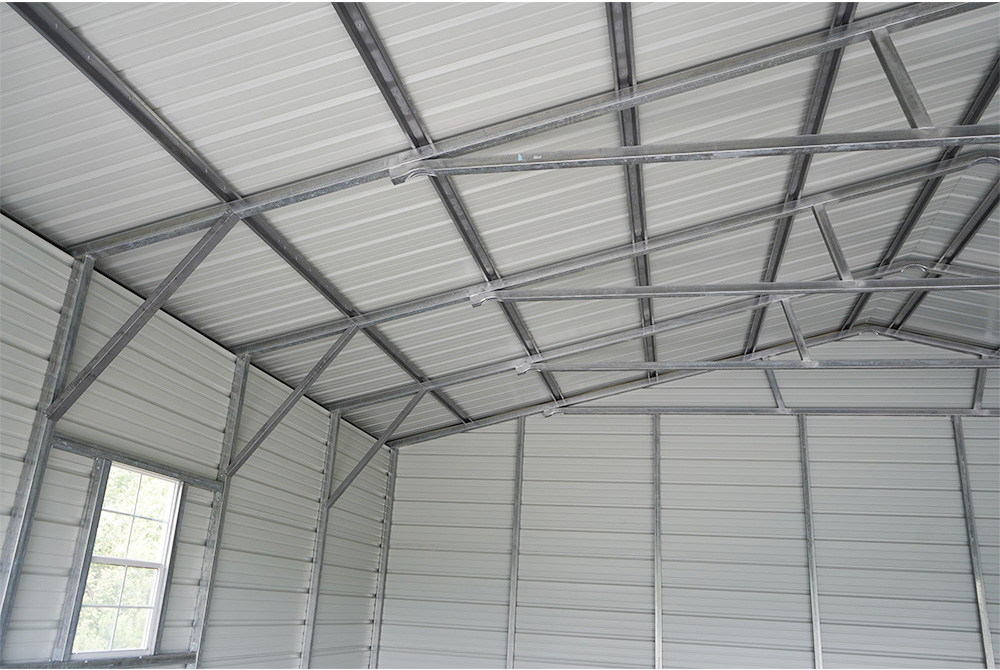
- Correct purlin sizing and spacing
- Strong roof-to-frame connections
- Edge detailing that resists uplift (where storms attack first)
Anchor it like you mean it
- Foundation design matched to building loads and soil conditions
- Correct anchor size, embedment, spacing, and installation
- Solid sealing at slab edges to fight wind-driven water
Treat openings as structural
- Proper framing around large doors
- Hardware and latching that holds under wind
- Weather sealing that survives freeze–thaw cycles
Stop condensation before it starts
- Insulation strategy that matches how you use the building
- Vapor control in the right place
- Ventilation that doesn’t just push moisture into the roof cavity
Bottom Line: Are Metal Buildings Safe in 2026 Storm Patterns?
Often, yes. A properly engineered and properly anchored metal building is one of the better long-term options we have for wind, hail, and rough weather. But metal buildings don’t do well when they’re treated like “kits” instead of structures. Underbuilt roof framing, ignored drifting, weak openings, and shortcut anchoring are what cause the ugly outcomes.
And the January 2026 ice/snow pattern is a reminder: storms don’t have to be dramatic to be destructive. Sometimes all it takes is heavy wet load, a little wind, and cold that lasts.
American Metal Buildings don’t sell “storm upgrades” as an add-on menu. Most of the wins happen before the first hole is drilled — choosing the right design criteria for your location, the right frame package, the right roof system, and the right connection details. That means we’re going to ask questions some sellers skip: where the building sits, what exposure it has, what you’re storing inside, and what kind of weather you’ve actually been seeing. And we’ll be honest about limits. No building is invincible. Our job is to spec a metal building that matches your risk, your use, and your budget.
 Perplexity
 ChatGPT