
Most people buy a garage by simply looking at the size. “24×36 should be enough.” Then after the building installation completes and they realize the layout is what they’re stuck living with, not the number on the quote.
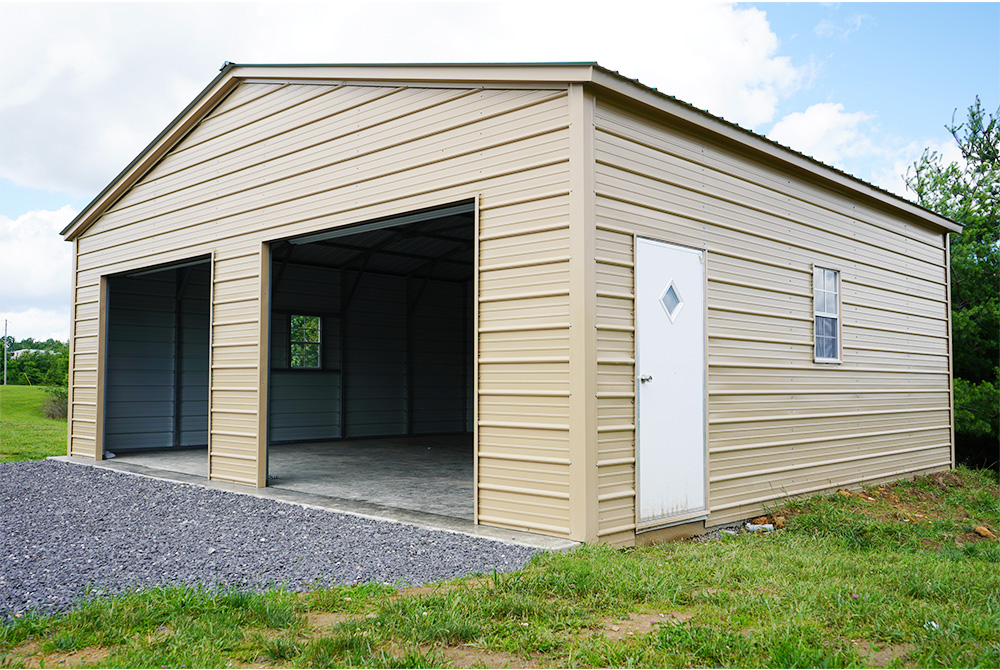
A 24×36 metal garage is popular because it’s big enough to feel useful, it fits on a lot of residential lot lines, and it usually lands in a price range people can live with. You can park vehicles, add storage, and still move around without feeling boxed in.
But this is also the size where small choices start hurting. Door width, door placement, and how much wall you give away to shelves decides whether the space feels easy or feels tight. Get those wrong and you spend the next ten years squeezing past mirrors and stepping around stuff.
What 24×36 metal garage layouts work best for real use?
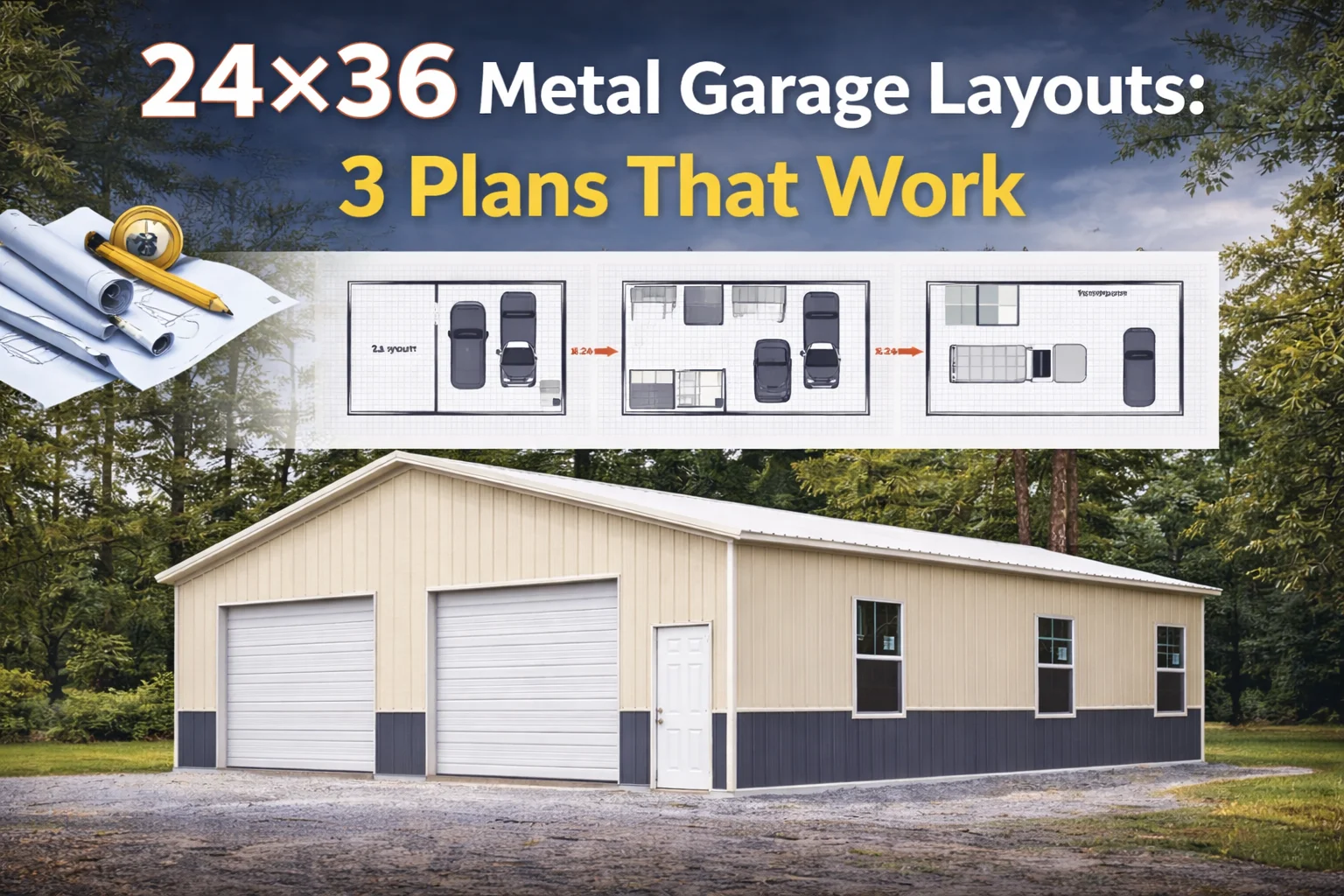
Here’s what actually works inside a 24×36:
- Two vehicles side-by-side with one dedicated storage wall and a clear walk lane
- One vehicle parked off to one side with a full workshop zone and clean tool flow
- A drive-through layout with doors on both ends for trailers and equipment
I’ve seen just about every version of a 24×36, and almost all of them land in one of those three camps.
What fits in a 24×36 metal garage (and what starts to feel tight)
A 24×36 is 864 square feet. On paper that sounds big. In real use, it depends on how much of it you give away to shelves, walls, and parked metal.
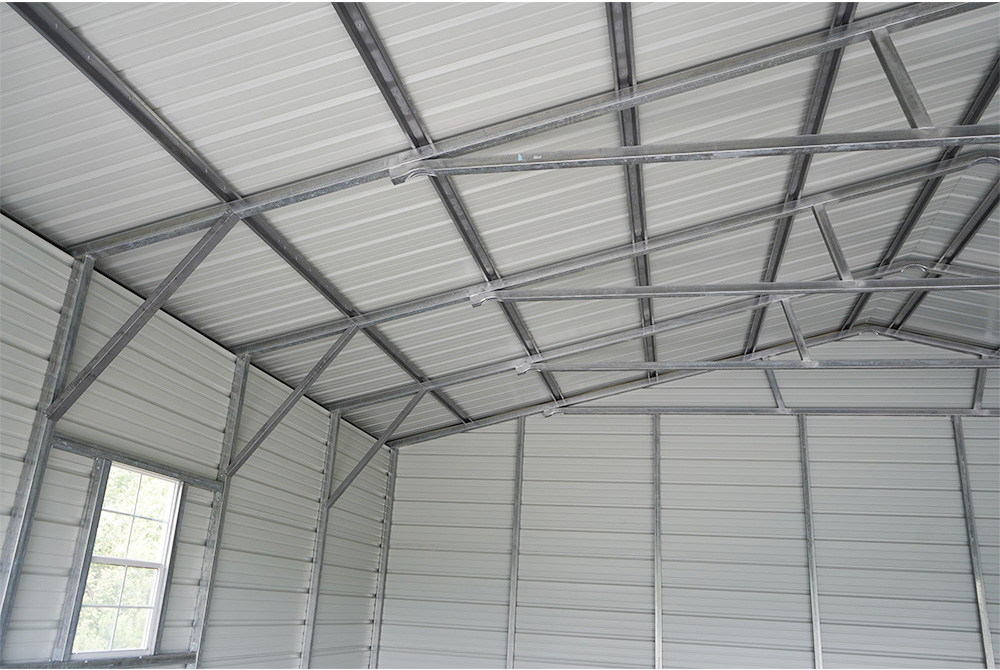
Inside dimensions are always a little smaller than the outside numbers once framing and liner panels are in. That doesn’t matter until you open a truck door and hit a shelf bracket with your knuckles. Read here the complete blog to understand what really fits into this 24×36 steel structure.
Fits comfortably:
- Two average cars or mid-size SUVs with storage on one side
- One full-size truck plus a bench and tool storage
- Mowers, side-by-sides, compact tractors, or small trailers with room to walk around them
Starts feeling tight:
- Two crew-cab trucks if you expect wide door swing
- Deep shelves on both long walls
- A bench setup plus two vehicles unless you plan your lanes carefully
Here are the measurements that actually decide whether it feels usable:
- Plan about 36 inches for a walk lane you’ll actually use
- Keep shelves near parked vehicles around 12–16 inches deep
- Bench zones work best when you can stand back 30–36 inches without hitting something
24×36 garage layout for two vehicles + a storage wall
This is the everyday layout. It’s for people who want the garage to stay a garage.
Who this works for
- Two-vehicle households
- Folks who want storage without losing the floor
- Anyone who values easy parking over permanent work zones
Door placement
If your driveway is straight, put the overhead door on the 24-foot end. That gives you a clean pull-in and leaves a 36-foot wall for storage.
One wide door is usually easier to live with than two narrow ones. If you do use two doors, leave space between them so you’re not threading mirrors every time.
Storage tradeoffs
Pick one long wall and make it the storage wall. Keep the other side mostly clear for walking and door swing.
The biggest mistake here is shelving both sides because it “uses the space.” It also kills clearance and turns the garage into a narrow hallway with bumpers in it.
24×36 garage workshop layout (one vehicle + bench + tools)
If you’re building this for projects, this layout usually feels better long-term.
Bench placement
Put the bench on a long wall, not the back wall. A back-wall bench adds a lot of walking you don’t notice on paper.
Leave some breathing room around it so you can clamp, sweep, and stage parts without stacking everything on top of each other.
Tool flow
You want:
- Bench → tools within two steps → clear cart lane → dirty zone away from clean tools
If you’re tripping over hoses and cords, the layout is fighting you.
Why depth matters
The 36-foot depth is what saves you here. It lets you stage projects, park a vehicle, and still move around without constantly shuffling things.
Plan a drop zone. Boots, bags, chargers, gloves — they show up whether you plan for them or not.
24×36 drive-through garage layout for trailers and equipment
This works when you tow or store equipment and you want straight-line access.
When it makes sense
- Regular trailer use
- Mowers, tractors, or long equipment
- Good access on both ends of the building
Layout basics
Doors go on opposite ends of the 36-foot depth. Keep the middle clear. Push storage to the sides and keep it shallow enough that you don’t clip it while turning.
I’ve watched plenty of folks build a perfect drive-through and then never use the back door because it drops them into mud or a fence line.
Layout comparison
| Layout | Best for | Watch out for |
|---|---|---|
| Two vehicles + storage wall | Daily parking | Shelving both sides kills clearance |
| One vehicle + workshop | Projects and tools | Bench on back wall adds wasted steps |
| Drive-through | Trailers and equipment | Needs usable access outside both doors |
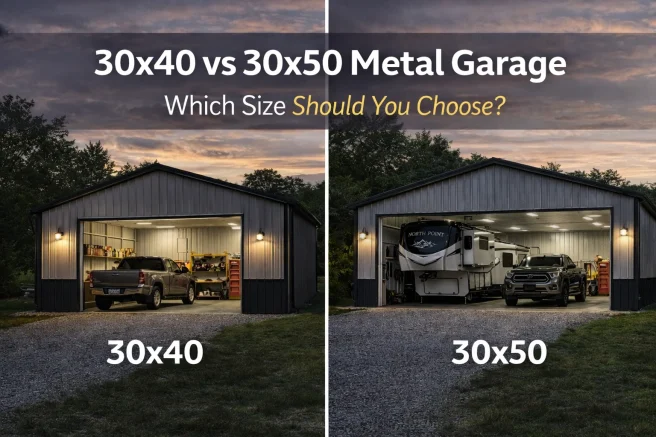
Read the complete blog to know Which Metal Building Size Should You Buy?
Common 24×36 garage layout mistakes
- Picking doors last instead of first
- Going too narrow on overhead doors
- Building shelves too deep near parked vehicles
- No planned drop zone for daily clutter
- Side door placed where storage blocks it later
I’ve seen brand-new 24×36 buildings feel tighter than a one-car garage because of those exact mistakes.
One thing I’ve had to fix more than once
I’ve had customers call back a year later because they couldn’t open their truck doors without hitting shelves. We ended up pulling out perfectly good shelving and moving it to one wall just to give them room to get in and out of the vehicle. That redo cost more than planning it right the first time.
FAQs
Is 24×36 big enough for two trucks?
Sometimes. Two half-tons can work with wide doors and shallow storage. Two crew-cab trucks feel tight fast.
What door size works best?
Width matters more than height for daily parking. Height matters for tall trucks and lifts.
Should I use one big door or two?
One big door is usually easier. Two doors can work, but spacing matters.
What wall height should I choose?
If a lift or tall equipment is even a maybe, plan taller walls now.
Can I add a lift later?
Yes, if wall height and door hardware were planned for it.
Where should the side door go?
Where you actually walk — and not where your storage wall will grow.
Want help laying this out before you order?
If you’re looking at a 24×36 and you’re ready to install one—or you just want help getting the doors, wall height, and layout figured out before you commit—reach out to the experts at American Metal Buildings. Our team will walk you through the whole process from customization to ordering, and help you avoid the common layout mistakes that make a garage feel tight. And if you’re still weighing options, you can also explore our wide range of custom steel buildings to compare sizes and setups that fit your site and how you actually plan to use the space.
 Perplexity
 ChatGPT