

More people are asking a simple question before they invest in metal buildings: What’s this structure going to look like after a few bad seasons? Not the day after it’s built. Five years later.
I’ve been on inspections after wind-driven rain and long, sloppy storms where the building didn’t “blow apart.” It just got pushed out of square a little. A roof edge lifted a hair. A door started sticking. Water got in at a seam and kept finding the same path every time it rained sideways. That’s the stuff that turns into real repair work.
Metal and wood can both hold up. They can also both fail. The difference is almost always in the connections and water details you don’t see from the driveway.
If you anchor and brace it correctly, a metal building tends to stay straight in high wind and isn’t harmed by getting wet—but weak anchors, light trim, and sloppy fasteners show up fast. A wood building can take wind well and is easier to repair, but repeated moisture shortens its life. Your results hinge on anchoring, openings, roof edges, and upkeep—not the material alone.
What storms do to buildings
Wind doesn’t need to “destroy” anything to cost you money.
- It pushes on a big wall and tries to rack the building out of square.
- It tugs on the roof, especially at corners and edges, like peeling tape.
- It drives water sideways, right under laps and behind flashing.
- It throws junk—branches, gravel, loose panels, yard furniture—into whatever sticks out.
Failure starts where parts meet. Roof-to-wall. Wall-to-foundation. Trim-to-panel. Door frame-to-wall. Every weak joint becomes a hinge.
Metal buildings in severe storms: what holds up, what falls apart
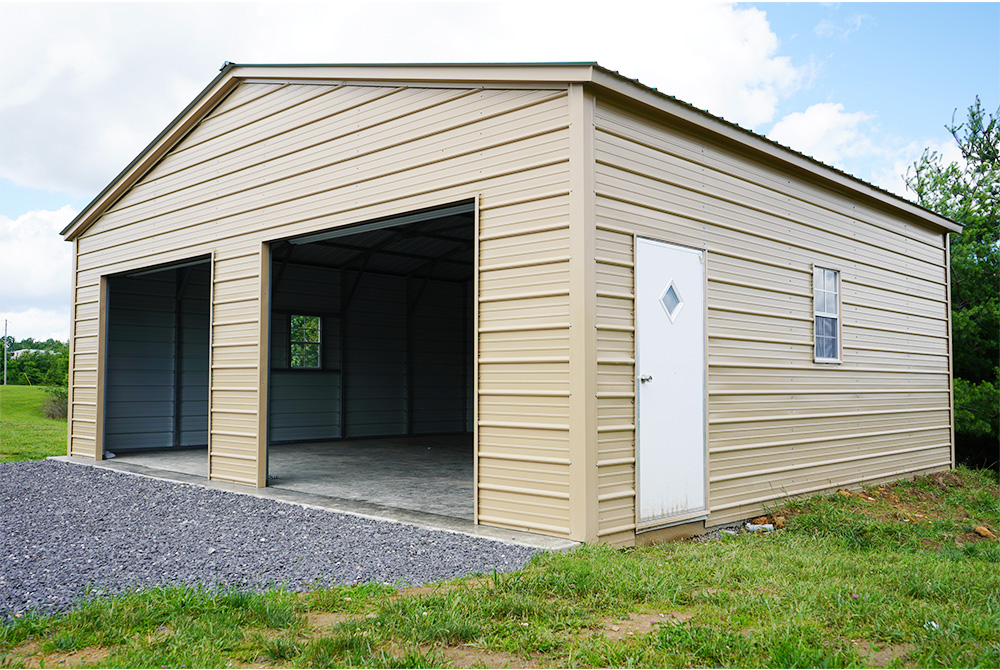
Here’s my stance: a properly built metal building is a strong storm performer. But it doesn’t forgive shortcuts.
What holds up
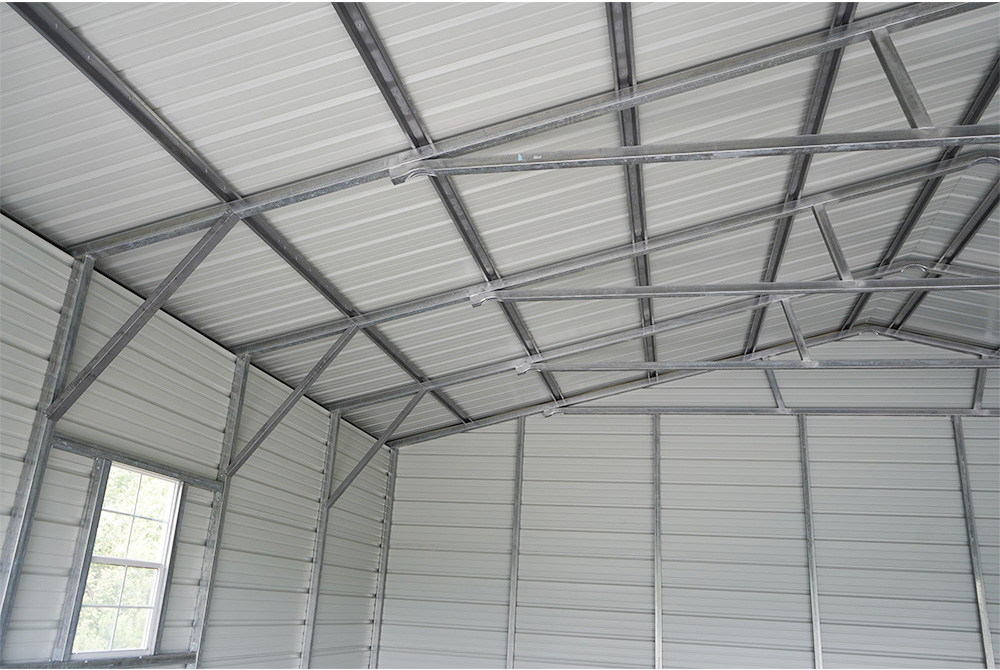
- The frame can stay square when wind loads hit hard, assuming the bracing package is real and installed.
- Steel doesn’t swell, warp, or rot. If water gets into it, you’re dealing with leaks and corrosion risk, not structural decay.
What falls apart
- Anchors. When the base connection is weak, the building shifts. After that, everything becomes a fight: doors, panels, roof seams.
- Roof edges. Eaves and corners are where metal roofs get tested first. If trim is light or poorly fastened, it can peel. Once it peels, water follows.
- Fasteners. Backed-out screws happen. Overdriven screws happen. Both leak. You won’t notice from the ground.
- Big openings. Wide overhead doors change how the building takes wind. If a door or its framing fails, internal pressure climbs and the roof sees a harder pull.
Metal isn’t “set it and forget it.” It’s “build it right or pay later.
Wood buildings in severe storms: what it does well, what it doesn’t
Wood gets unfairly dismissed. I’ve seen well-built wood structures ride out serious wind and keep working.
What wood does well
- Wood walls can flex a bit and come back—if the sheathing and fastening are right.
- Repairs are practical. After a storm, local crews can replace damaged sections without waiting on specialty parts.
Where wood loses years
- Moisture. One wet event that dries out is manageable. Chronic damp is what ruins wood buildings: softened framing, loose fasteners, rot, mold, warped openings.
- Hidden damage. I’ve opened walls that looked fine outside and found wet insulation and stained studs inside. The leak was small. The time was long.
- “Looks okay” isn’t proof. A wood building can be compromised around windows, bottom plates, roof edges, and still look normal until you’re deep into repairs.
If you pick wood, you’re signing up to stay on top of water control. That’s the deal.
Side-by-side (quick table)
| Issue | Metal building | Wood building |
|---|---|---|
| Wind | Stays straight when braced + anchored right | Strong when sheathed + strapped + nailed right |
| Water | Doesn’t absorb water; leaks show up at seams/edges | Can tolerate short wetting; long damp causes decay |
| Debris | Dents and loosened trim/fasteners are common | Broken shingles/siding; punctures and cracked sheathing |
| Repairs | Often precise, sometimes specialty labor | Usually faster with common trades/materials |
| Repeated seasons | Holds up if edges/fasteners are maintained | Holds up if moisture is controlled and checked |
What buyers miss (and what costs them)
- Storm #1 isn’t the test. Storm #4 is. Small looseness becomes movement. Movement becomes leaks. Leaks become long-term damage.
- Post-storm checks matter more than the storm. Roof edges, corners, penetrations, door frames. Same spots every time.
- Insurance focuses on visible damage. Quiet water problems don’t always get caught early. You catch those with inspection, not paperwork.
- Your site can be rougher than the forecast. Open fields, ridges, coastal exposure—wind hits harder and longer. Same county, different reality.
- Resale tells show up fast. Stained ceilings, soft trim, recurring roof patchwork, doors that don’t close cleanly. Buyers notice.
When material matters most—and when it doesn’t
I lean metal when
- You want a shop or storage building with big open spans.
- You’re exposed to wind and you’re willing to pay for real anchoring and bracing.
- You want a structure that won’t quietly lose strength because it got damp a few times.
Wood makes sense when
- You want easy future changes—walls, additions, remodels.
- You need fast repairs with local crews and standard materials.
- You’re building conditioned space and you’re disciplined about flashing, drainage, and inspections.
Material doesn’t save you when
- The load path is broken (roof not tied to walls, walls not tied to foundation).
- Roof edges and penetrations are treated like afterthoughts.
- Nobody checks the building after storms.
Pick the building you can maintain. That’s the honest answer.
If you want a building that still feels solid years from now, don’t start with “metal or wood.” Start with anchoring, bracing, openings, roof edges, and a plan to inspect after rough weather. That’s where storm performance lives.
For buyers weighing long-term durability in storm-prone areas, understanding how different materials behave under real conditions matters more than headlines. At American Metal Buildings, we help customers think through those tradeoffs so the building they choose still makes sense years down the road.
 Perplexity
 ChatGPT