
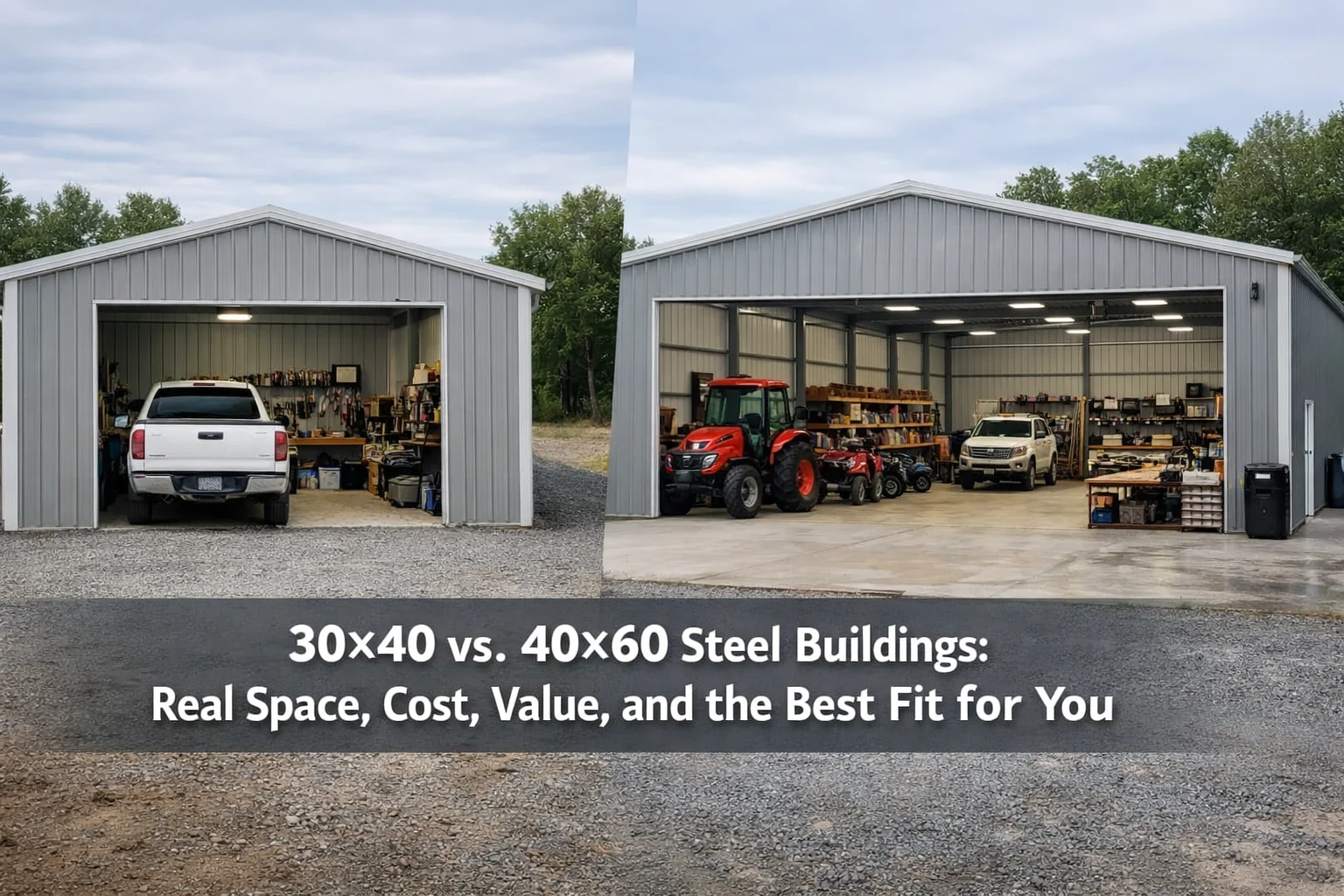
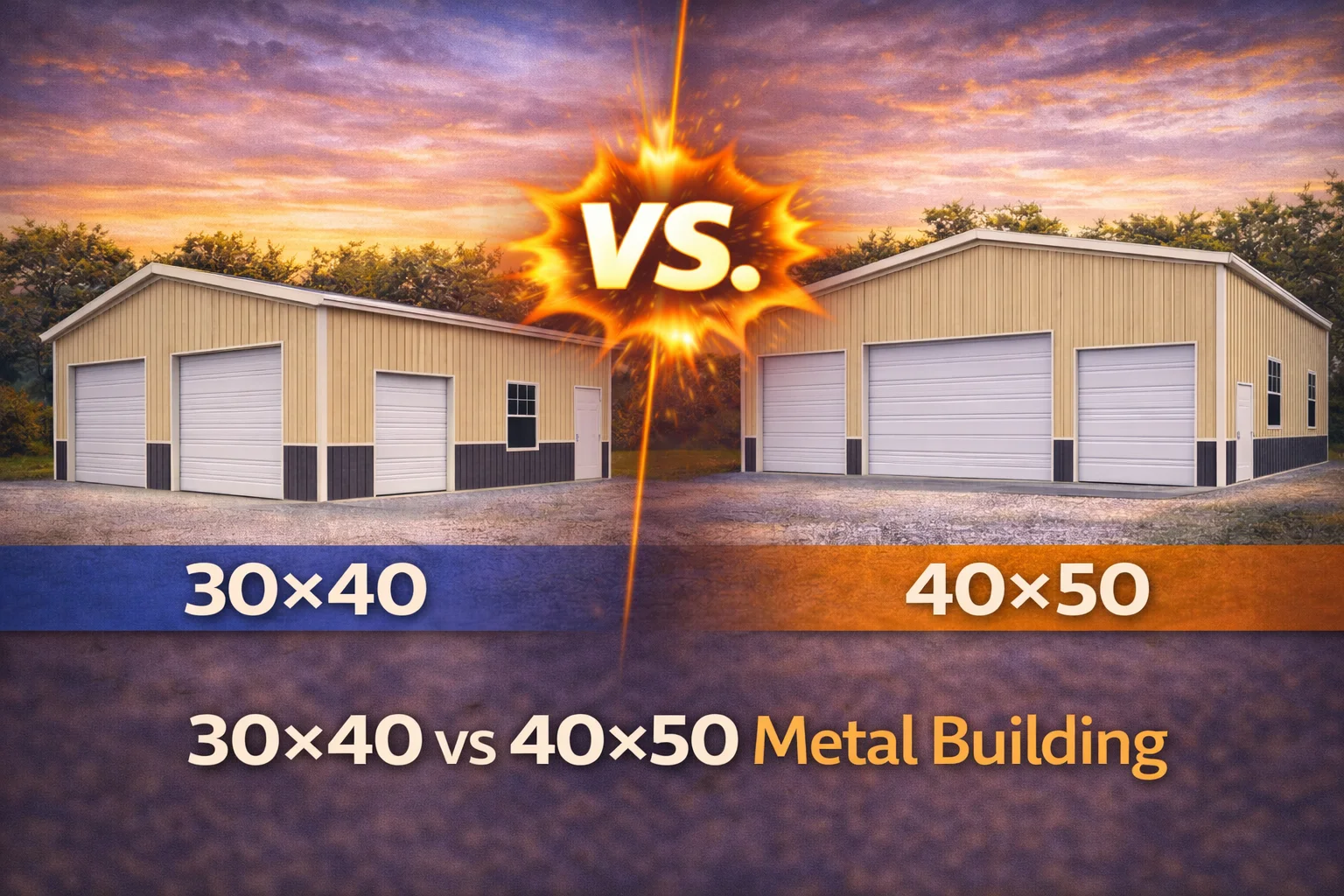
I hear this one a lot after somebody lays it out in the driveway with stakes and string: “Does a 30×40 feel like a real shop… or am I going to regret it?” On paper, 1,200 square feet sounds massive. Then you picture a pickup, a side-by-side, a mower, a workbench, and a shelf line. And suddenly you’re asking where you’re supposed to walk. Here’s the thing: most people don’t regret the building when it’s empty. They regret it once they live in it. They buy a taller tractor. They add a trailer. They decide they want a lift. Or...
Blog
30th December, 2025
Posted In: Buildings
The 30×40 vs 40×50 question usually comes down to one thing: how much clear, walkable space you’ll have once vehicles, doors, and storage are actually in the building. On paper, 800 extra square feet sounds like a simple upgrade. In real life, it’s the difference between a shop that stays usable and one that slowly turns into a tight garage you keep “meaning to reorganize.” What throws buyers early is how many size comparisons ignore the stuff that steals space fast: overhead doors placed where your best tool wall should’ve been, shelves that stick out farther than you planned, trailer...
24th December, 2025
Posted In: Buildings
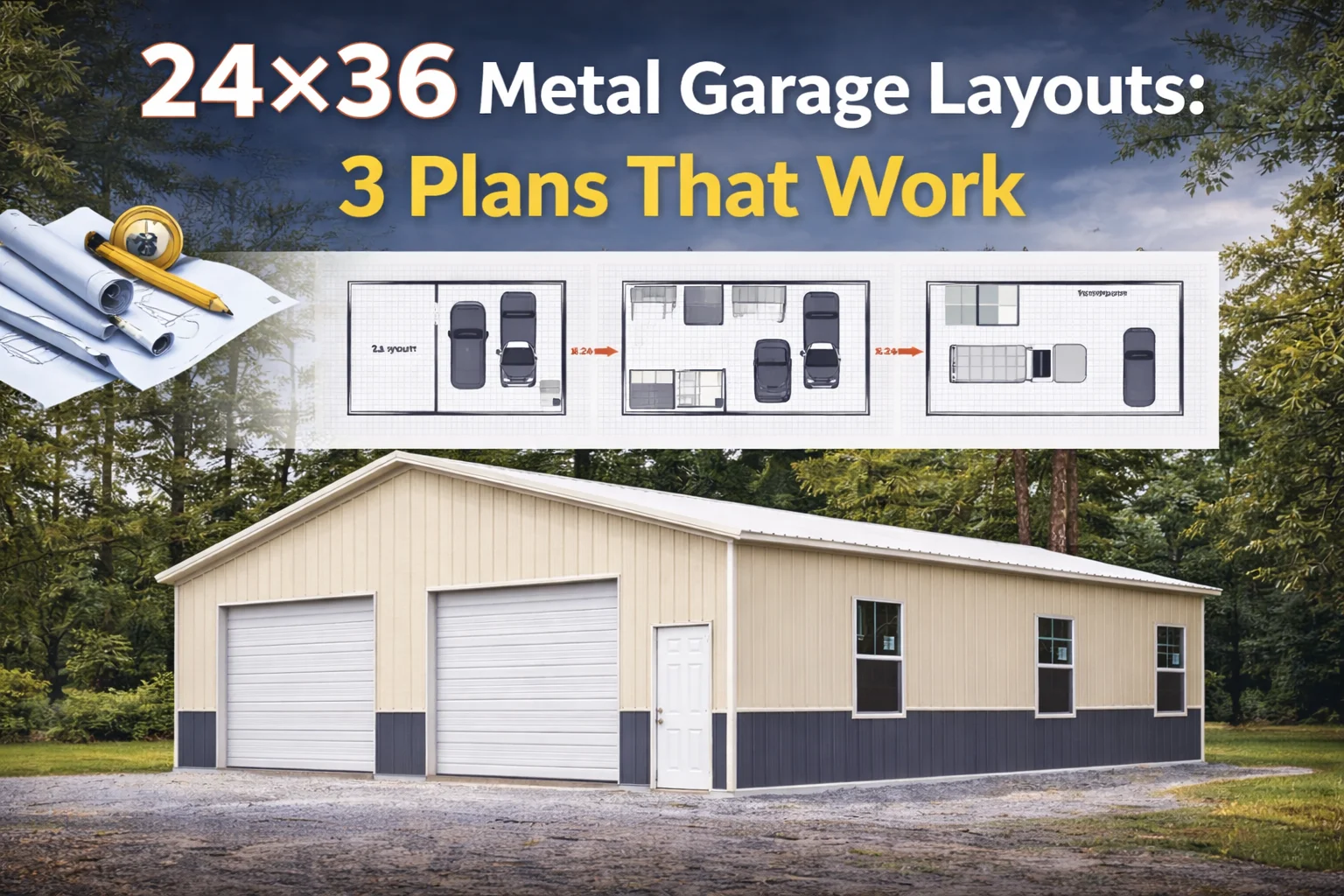
Most people buy a garage by simply looking at the size. “24×36 should be enough.” Then after the building installation completes and they realize the layout is what they’re stuck living with, not the number on the quote. A 24×36 metal garage is popular because it’s big enough to feel useful, it fits on a lot of residential lot lines, and it usually lands in a price range people can live with. You can park vehicles, add storage, and still move around without feeling boxed in. But this is also the size where small choices start hurting. Door width, door...
22nd December, 2025
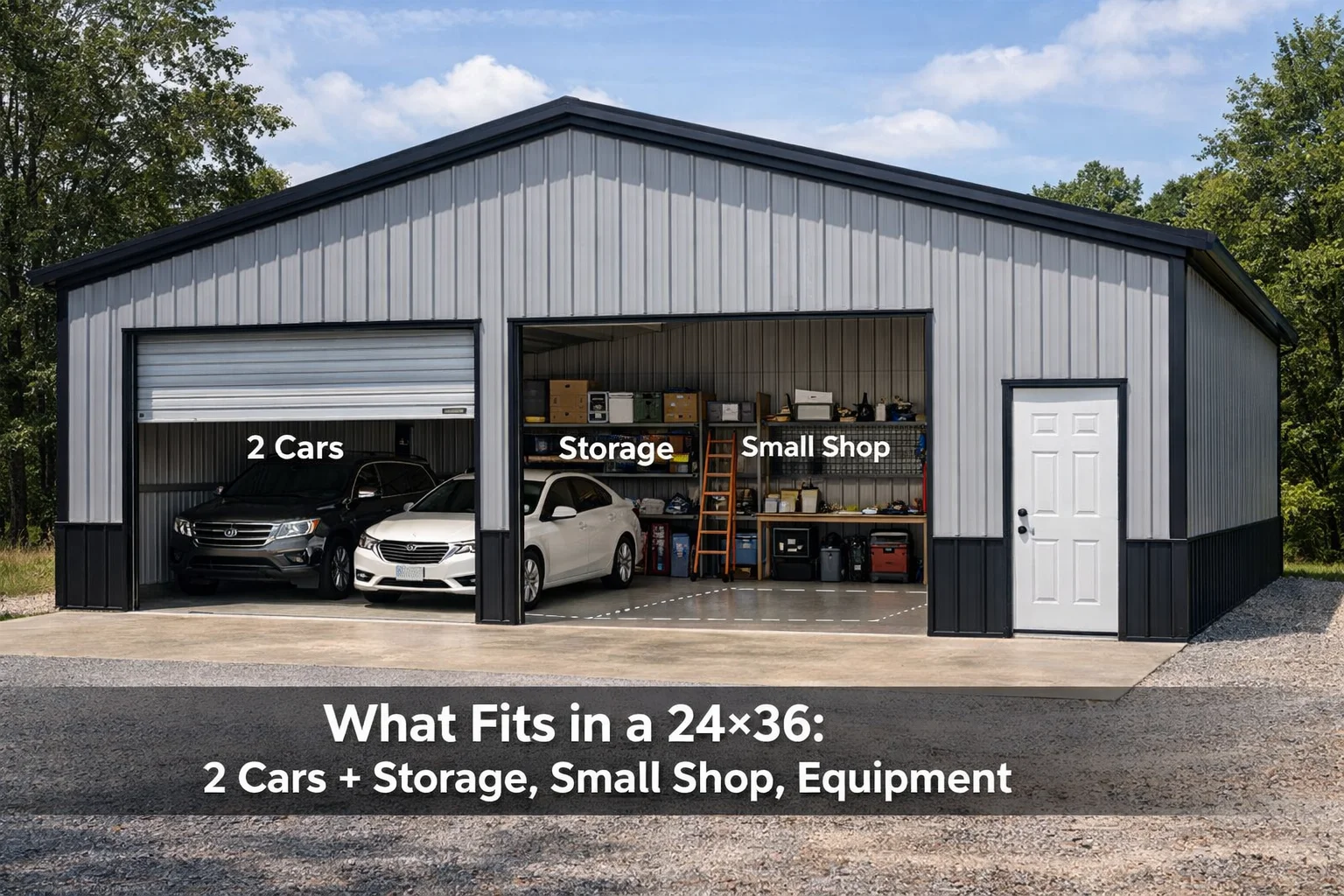
A 24×36 is big enough to work—right up until you try to make it do three jobs at once. Two cars is easy. Two cars plus a real bench, wall shelves, and a mower or side-by-side is where the floor plan starts getting honest. The building isn’t the problem. The problem is losing the lane you need to walk, roll a cart, and actually use the space. The good news is a 24×36 is one of the better “do a few things well” sizes. The 36-foot length gives you a real chance to zone the space: parking up front, storage...
19th December, 2025
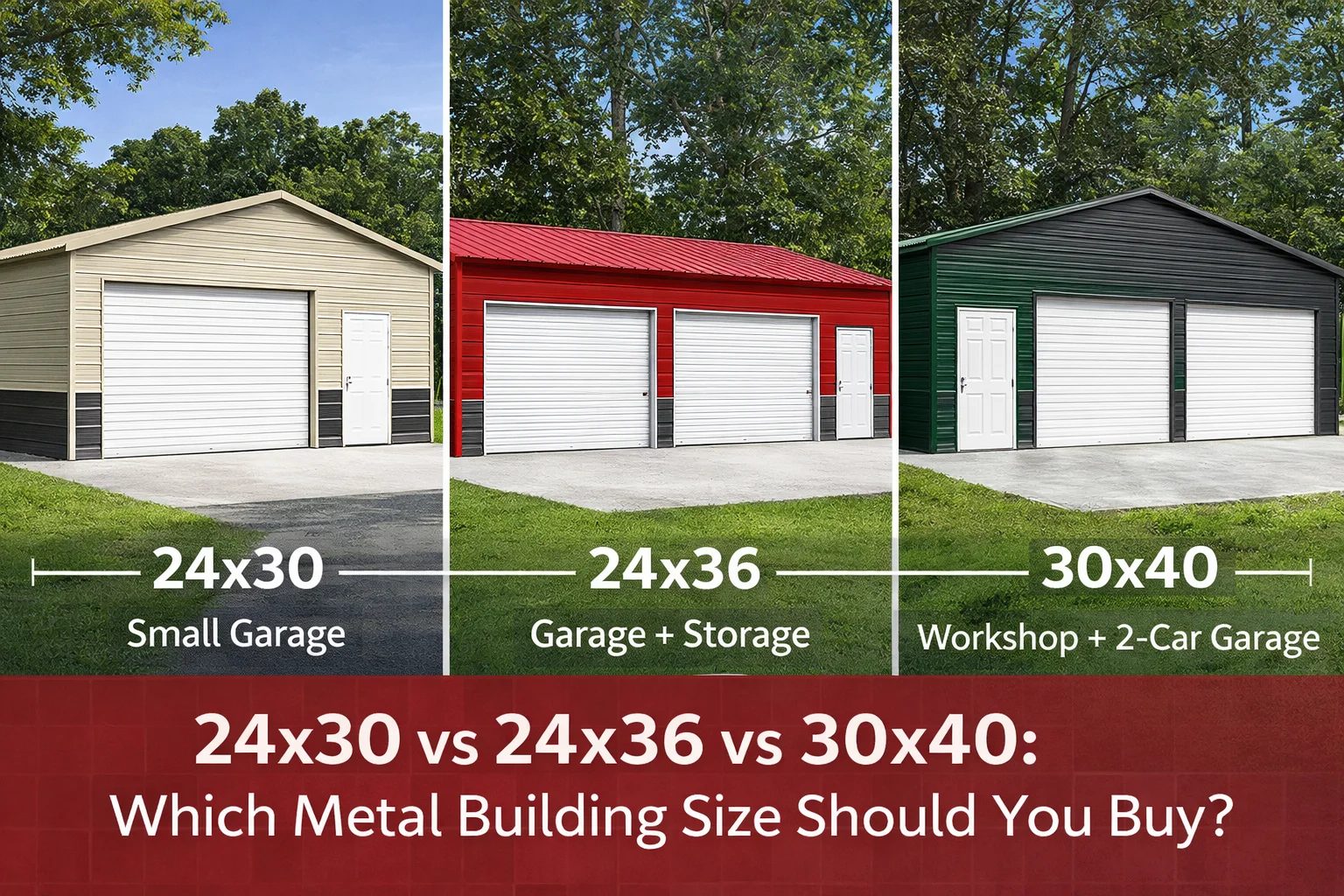
These three sizes get compared for a reason: they’re the “close call” options—where you can make a smart buy or end up with a building that technically fits but feels tight every time you use it. I’ve watched buyers fixate on square footage and miss what actually decides comfort: door placement, door clearance, and how much of that 24-foot width gets eaten up once benches and shelving are in and the shop is doing real work. A 24×30 is usually a straight garage/storage move. A 24×36 is where you can finally carve out a rear zone that doesn’t get swallowed...
18th December, 2025
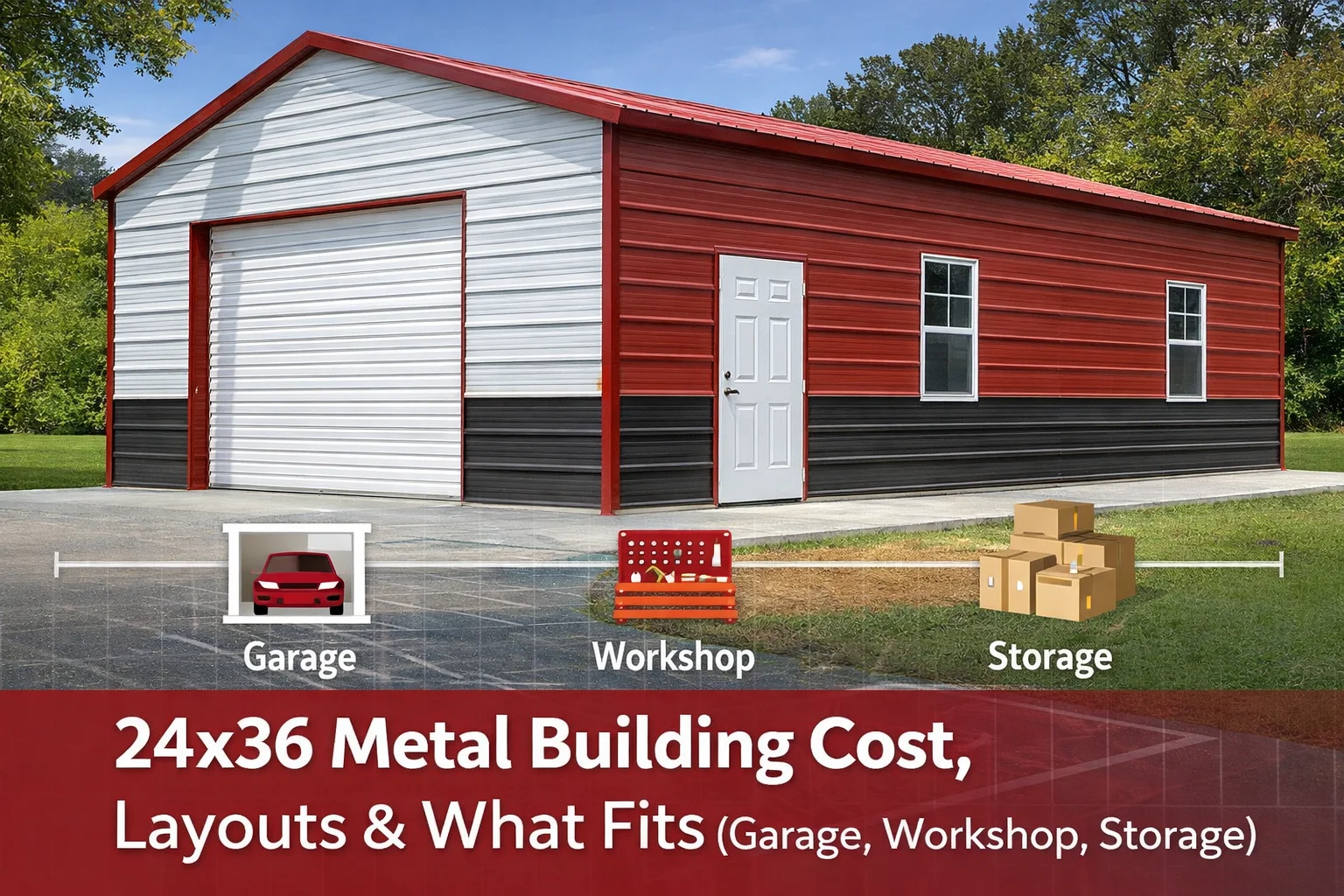
A 24×36 metal building sounds like a simple choice until you start laying out real life inside it. Two vehicles, a mower, a tool chest that actually opens, shelving that doesn’t block doors, and a workbench that isn’t shoved into a corner—those are the things that decide whether the building feels comfortable or instantly tight. This footprint is popular for a reason: 24 feet wide is manageable on most sites, and 36 feet long gives you a true “garage-plus” layout—parking up front with a usable zone behind it for tools, storage, or a small shop setup. The part most people...

17th December, 2025
Posted In: Commercial Metal Buildings
40x50 Metal Buildings at a Quick Glance A 40x50 building gives you right around 2,000 square feet of usable space. That’s not small. It gives you the room to park trucks, run a woodworking business, or just store equipment without struggling for more square footage. The basic cost for such a structure, before any fancy accessories, usually falls somewhere between $22,000 and $40,000.Now, that range is just the shell. Once you start digging into the things that make a building usable, such as site work, permits, foundation, insulation, thicker gauge panels, taller walls, and bigger doors, the original number changes....

28th November, 2025
Why Budgets Blow Up Most people go into a metal building project with a set number in their head. Then the bills start rolling in, and suddenly that number doesn’t stretch as far as it used to. It’s not that anyone made a huge mistake; it’s that a lot of little things never made it onto the first quote. In this blog, we’ll explore some of the toughest and costliest aspects of developing your metal building budget, and how to avoid pitfalls along the way. Quick Answer Metal building budgets usually go over because the “kit price” excludes key costs...

29th October, 2025
Posted In: Buildings
Metal Building Colors Play a Bigger Role Than You Think Choosing colors for a metal building sounds simple, but it’s one of those details that quietly defines everything. The right color combo makes a building look sharp, stay cooler, and hide years of wear. The wrong one can fade fast, show every dent, or just feel off once it’s up. The color isn’t just about style. It decides how hot the building runs in summer, how often you’re out there washing dirt off the walls, and how long that paint job actually holds up. In here, we’ll show you what...

27th October, 2025
Posted In: Buildings
Buying a metal building can get overwhelming. Garages, barns, carports, RV covers, commercial shops — from the outside they can look similar, but they’re not built for the same purpose. The right structure depends on three things: What you’re storing Where the building will install What your local building authority will approve Below, we’ll walk through the main building types we design and install, what each one is actually built to do, and the problems that usually show up when people pick the wrong style or go too small. Why Getting the Right Building Up Front Matters Once the frame...
40x50 vs 40x60 Metal Building: Which One Do You Need?
30x50 Garage Cost Guide: Prices, Options & What to Expect
30x40 vs 30x50 Metal Garage: Which Size Actually Works for You?
Buildings
45
Combo Metal Buildings
1
Commercial Metal Buildings
9
Farm Buildings
7
Garages
12
Hiking
1
Metal Barns
5
Metal Building Foundation
1
Metal Buildings Texas
1
metal buildings with Lean-to
1
Metal Carports
9
Metal Sheds
2
Motorcycle Maintenance
1
Rust Protection
1
RV Cover
3
Steel Buildings
3
Storage Buildings
7
Summer
1
Swimming Pool
1
Winter
1
Work From Home
1